Send us a message
Sarracenia psittacina var. okefenokeensis f. luteoviridis (Sandy Creek Road, Bay County, Florida)
MS-SO017
MK-H71O, JS-H84
MK-H384a
MK-H362
Sarracenia minor var. minor - Green Form (Fargo, Clinch County, Georgia)
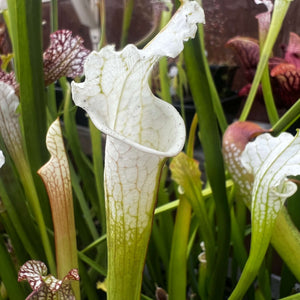
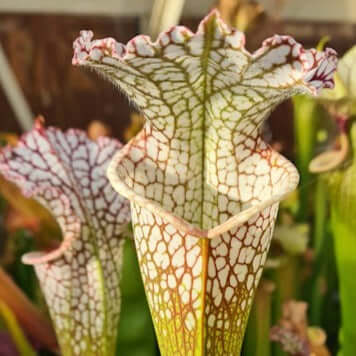
Sarracenia leucophylla var. alba White Top (Baldwin County, Alabama)
This plant is a rare, anthocyanin-free form of Sarracenia leucophylla. It originates from a specific location near Perdido in Alabama, USA. The 'vi...
View full detailsThe 'Hurricane Creek' cultivar name can be applied to Sarracenia leucophylla var. alba clones, or their seeds, that were found at the Hurricane Cre...
View full detailsMK-L45
MK-L49B
MK-L39a
MK-L83
MK-L18
Sarracenia flava var. rugelii (Blackwater National Park, Florida)
MK-F149
JS-F22, IP-F13
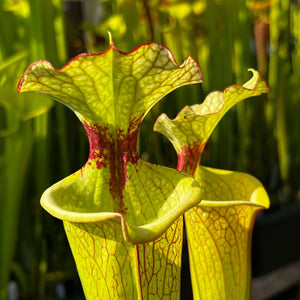
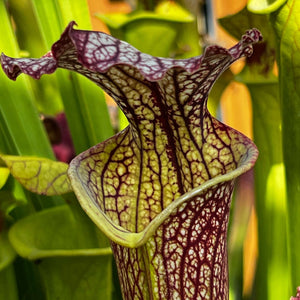
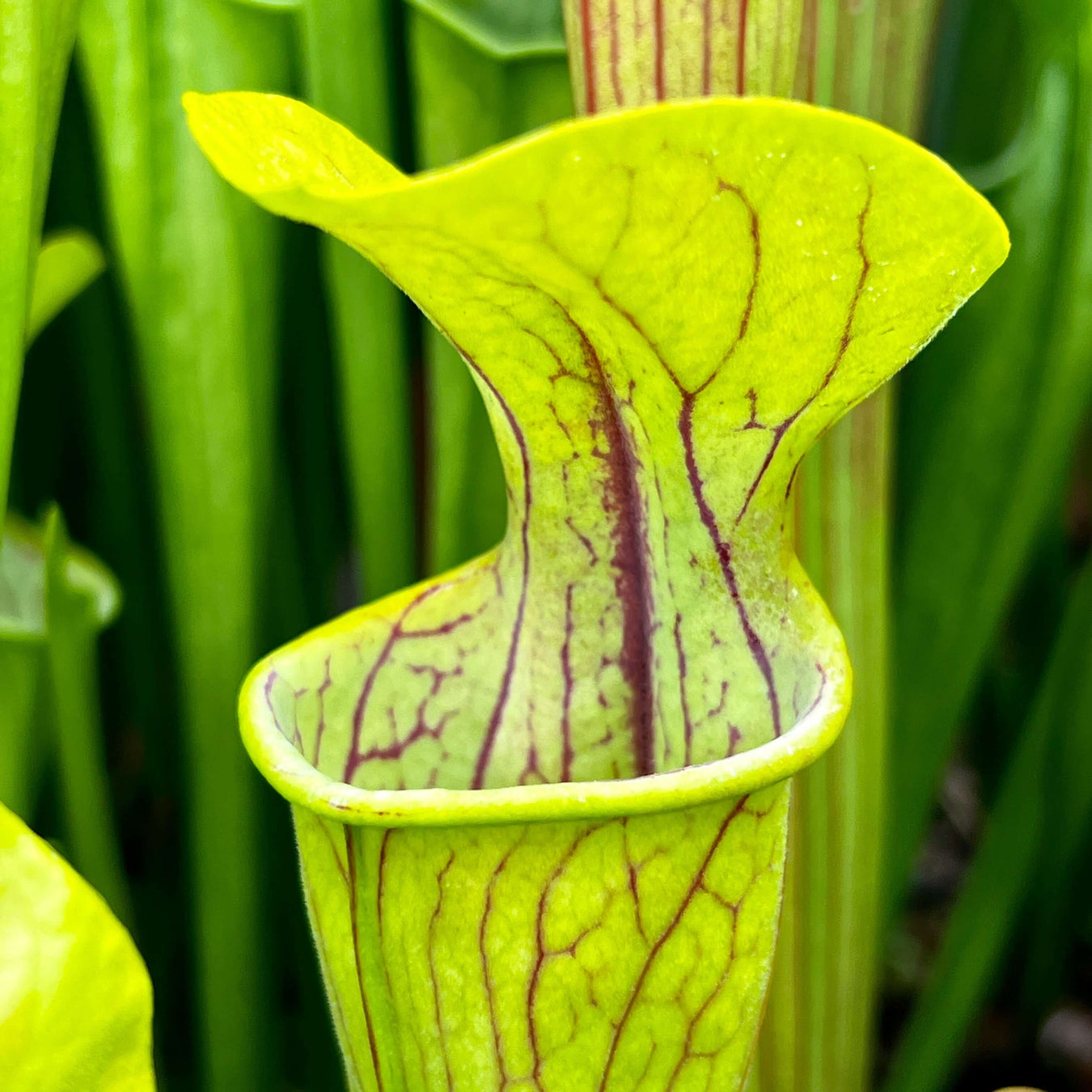
Sarracenia flava var. ornata (Sandy Creek Road, Bay County, Florida)
Sarracenia flava var. ornata 'Killer' is a distinct flava originating from a specific locality in Okaloosa County, Florida. Its genetic background ...
View full detailsMS-F433
Yes. Sarracenia are temperate carnivorous plants and naturally go dormant in winter. In the UK, dormancy usually happens outdoors without intervention as days shorten and temperatures drop. During dormancy, growth slows or stops, and older pitchers may brown off; that’s normal. Keep the plant outside in a bright, airy spot, keep the compost damp (not waterlogged), and avoid keeping it warm indoors over winter. Dormancy is important for long-term health and strong growth in spring.
Use a low-nutrient carnivorous plant mix such as peat and perlite, or peat and silica sand (not builders’ sand). Avoid multi-purpose compost, garden soil, and anything with fertiliser added; these can burn the roots. If you prefer peat-free options, choose a carnivorous-plant-safe mix specifically formulated for these plants. Repotting into a fresh mix every few years helps keep plants vigorous.
Full sun is ideal. In a bright greenhouse or outdoors in a sunny position, you’ll get better colour, sturdier pitchers, and stronger growth. A little light shade is usually fine, but too much shade often causes weaker, greener growth and fewer pitchers. If you’re growing on a balcony, patio, or in a bog planter, choose the brightest spot you have.
Rainwater is strongly recommended. Like most carnivorous plants, Sarracenia dislike minerals and salts that can build up in compost over time. Use rainwater, distilled water, or reverse-osmosis (RO) water whenever possible. If you’re stuck, some UK tap water is low enough in dissolved minerals to use occasionally, but long-term it can lead to leaf tip burn, slow growth, and a gradual decline. When in doubt, rainwater is safest.
In most of the UK, yes, Sarracenia are generally well-suited to outdoor growing. They can handle typical UK winter conditions while dormant. An unheated greenhouse will provide your plants with a longer growing season, though. Species such as Sarracenia leucophylla and Sarracenia psittacina often perform better in a greenhouse.