
WhatsApp
Send us a message
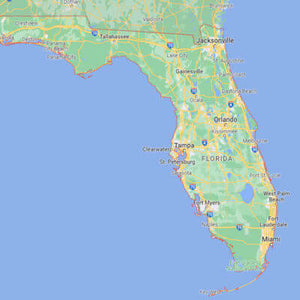
A selection of Sarracenia plants, or their seeds, that originated from the state of North Carolina the United States. Location data is essential for helping collectors be a vital store of regional Sarracenia genetics, particularly where natural habitats are endangered or have already been destroyed.
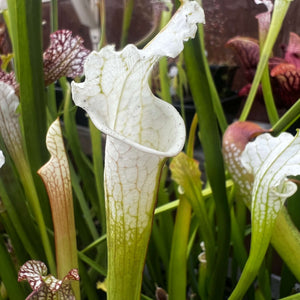
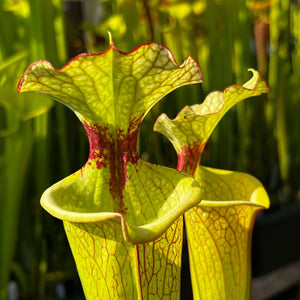
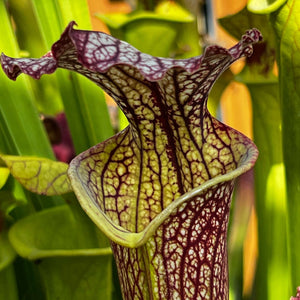
South Carolina provides natural habitats to Sarracenia flava, Sarracenia oreophila, Sarracenia minor, Sarracenia rubra, Sarracenia jonesii and Sarracenia purpurea subsp. venosa.
Possibly the most handsome Sarracenia flava var. maxima out there! This Sarracenia flava was selected by Matt Soper of Hampshire Carnivorous Plants...
View full detailsSarracenia flava var. cuprea (Shallotte, Brunswick County, North Carolina) is a copper-lidded form from the coastal plain of North Carolina. Plants...
View full detailsBeautifully blushed with copper on the lid, this Sarracenia flava var. cuprea is a great example of a classic copper-top Sarracenia flava. A vigoro...
View full detailsSarracenia flava var. cuprea (Green Swamp, North Carolina)
MK-RJ2, JS-RJ2
Sarracenia purpurea subsp. venosa var. montana (Jackson County, North Carolina)
Sarracenia oreophila var. ornata (Clay County, North Carolina) is a nicely veined form of the green pitcher plant from are rare location in the mou...
View full detailsSarracenia flava var. ornata F433 is a location-specific form originating from the Green Swamp in North Carolina. It shows the heavy vertical venat...
View full detailsThe clue's in the name with this Sarracenia flava! This one's a whopper and is the largest Sarracenia flava var. flava in the collection. The pitch...
View full detailsSarracenia flava f. viridescens (Shallotte, Brunswick County, North Carolina) is a rare anthocyanin-free form of the yellow pitcher plant. Originat...
View full detailsSarracenia flava var. atropurpurea 'Waccamaw' is a stunning Sarracenia flava var. atropurpurea from North Carolina’s Green Swamp. It has the classi...
View full detailsCuprea translates from Latin to mean 'copper'. It's easy to see why this name has been given to this variety of Sarracenia flava, the operculum (li...
View full detailsThis is an attractive clone of copper-top Sarracenia flava. Relatively fast-growing, this flava can make a great display if left to fill a large po...
View full detailsThe pitchers of this impressive Sarracenia flava var. flava are well-formed and large, usually about 75cm tall or sometimes more. The upper part of...
View full details