
WhatsApp
Send us a message
Sarracenia oreophila, also known as the green pitcher plant is the most endangered of all Sarracenia species, its natural range is now limited to a small number of sites in northern Alabama, North Carolina and Georgia.
There are two varieties of Sarracenia oreophila: the species-typical Sarracenia oreophila var. oreophila and the more ornate, veiny Sarracenia oreophila var. ornata.
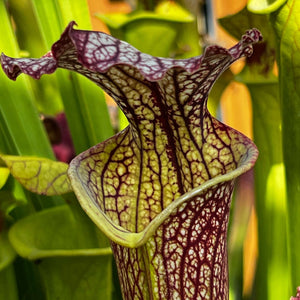
This is an attractive Sarracenia oreophila both in shape and pattern. As the name suggests it is heavily veined with the veins getting darker as th...
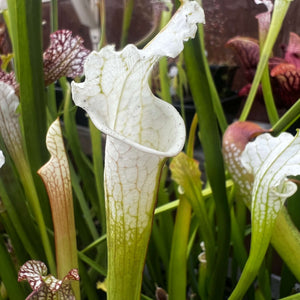
View full detailsThis is an excellent example of a typical phenotype Sarracenia oreophila var. oreophila! The pitchers are a delicious lime green colour with a slig...
View full detailsSarracenia oreophila var. ornata (Clay County, North Carolina) is a nicely veined form of the green pitcher plant from are rare location in the mou...
View full detailsMK-O11, JS-O9
Sarracenia oreophila var. oreophila (Boaz, Etowah County, Alabama)
Is this the best-looking Sarracenia oreophila around? It's certainly a contender! Originally from the Sand Mountain plateau in Northwest Georgia, t...
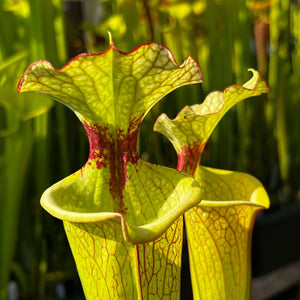
View full detailsThis is a fabulous Sarracenia oreophila. The title says it all; the lip and throat are red, and the pitchers are heavily veined! This is a strong-g...
View full detailsMK-O10