
WhatsApp
Send us a message
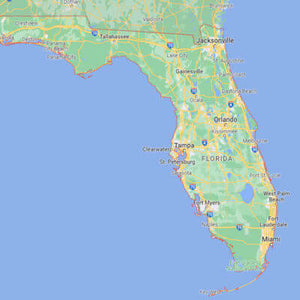
Sarracenia flava, also known as the yellow pitcher plant, has a large natural range that extends from southern Alabama to the coastal plains of southern Virginia, North Carolina and South Carolina.
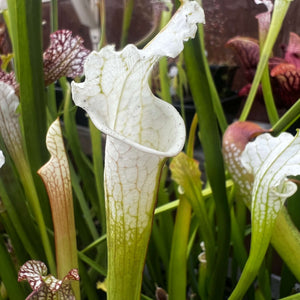
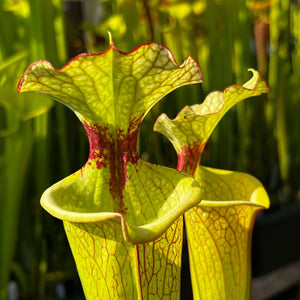
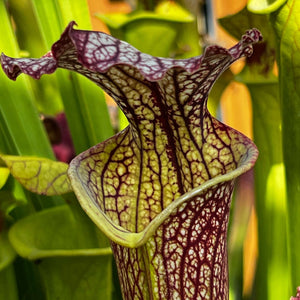
There are several varieties of Sarracenia flava; Sarracenia flava var. atropurpurea, Sarracenia flava var. cuprea, Sarracenia flava var. flava, Sarracenia flava var. maxima, Sarracenia flava var. ornata, Sarracenia flava var. rubricorpora, Sarracenia flava var. rugelii and Sarracenia flava f. viridescens. Sarracenia flava is a robust species of Sarracenia and often fairs well outside in the UK.
Sarracenia flava var. cuprea IS-FC01
Possibly the most handsome Sarracenia flava var. maxima out there! This Sarracenia flava was selected by Matt Soper of Hampshire Carnivorous Plants...
View full detailsSarracenia flava var. rubricorpora F25 (Apalachicola National Forest, Florida) is a selected red tube form from one of the most famous Sarracenia r...
View full detailsSarracenia flava var. cuprea (Shallotte, Brunswick County, North Carolina) is a copper-lidded form from the coastal plain of North Carolina. Plants...
View full detailsBeautifully blushed with copper on the lid, this Sarracenia flava var. cuprea is a great example of a classic copper-top Sarracenia flava. A vigoro...
View full detailsThis is a vigorous-growing copper-topped Sarracenia flava var. cuprea. The pitcher hoods are large with the cuprea blushing on the top. A really ni...
View full detailsA cross of Sarracenia flava plants from two different sites in Florida: Blackwater and Wewahitchka. The seeds that produced this clone were origina...
View full detailsOriginally from the national collection of Paul & Jackie Gardner of P&J Plants (F RUG 01) this is a fantastic cut-throat Sarracenia flava! ...
View full detailsSarracenia flava var. rugelii 'Maxima' is a vigorous and elegant form of Sarracenia flava, selected by Bruce Bednar from Lee's Botanical Gardens. D...
View full detailsThis lidless form of Sarracenia flava var. ornata is an unusual variation of the ornate yellow pitcher plant. Unlike typical Sarracenia flava, whic...
View full detailsSarracenia flava var. atropurpurea 'Waccamaw' is a stunning Sarracenia flava var. atropurpurea from North Carolina’s Green Swamp. It has the classi...
View full detailsSarracenia flava var. atropurpurea (Santa Rosa Beach, Walton County, Florida) is a dark, heavily pigmented form selected from the Florida panhandle...
View full detailsSarracenia flava var. rubricorpora 'Roy Lancaster' is a beautiful cultivar selected by carnivorous plant expert Matt Soper. Named in honour of the ...
View full detailsThe Sarracenia flava var. maxima plants have all green pitchers but are not anthocyanin-free like Sarracenia flava var. flava f. viridescens. Young...
View full detailsAs the name suggests, this is a very large growing Sarracenia flava var. cuprea! This is not our largest cuprea, that is Sarracenia flava var. cupr...
View full detailsJS-F130
Sarracenia flava f. viridescens (Shallotte, Brunswick County, North Carolina) is a rare anthocyanin-free form of the yellow pitcher plant. Originat...
View full detailsSarracenia flava var. rugelii (Blackwater National Park, Florida)
MK-F149
JS-F22, IP-F13
JN-SF23, MK-F26?
In 1996, during a visit to Geneva Botanical Gardens, Italian grower Andrea Amici was captivated by a stand-out Sarracenia flava in their carnivorou...
View full detailsSarracenia flava var. ornata (Sandy Creek Road, Bay County, Florida)
Sarracenia flava var. ornata F433 is a location-specific form originating from the Green Swamp in North Carolina. It shows the heavy vertical venat...
View full details