
Skip to content

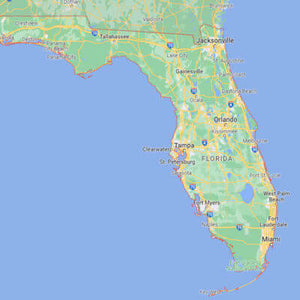
Sarracenia flava var. atropurpurea (Santa Rosa Beach, Walton County, Florida)

North American Pitcher Plant
Availability:
Out of stock
Sold out
Original price £39.99 - Original price £39.99
Original price
£39.99
£39.99 - £39.99
Current price £39.99
Supplied in a 9cm Pot

You’ll receive one established division growing in a 9cm pot with soil perfect for Sarracenia. Plant size and seasonal appearance will vary; photos show our mother plants.

Seasonal Information

30.07.26 - Many Sarracenia species and hybrids are starting to lose their early pitchers, which may now be removed before shipping

Delivery Information

Delivery from £4.99 (mainland UK). We aim to dispatch orders within 2 working days.

Description of Sarracenia flava var. atropurpurea (Santa Rosa Beach, Walton County, Florida)

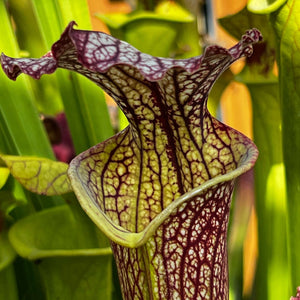
Sarracenia flava var. atropurpurea (Santa Rosa Beach, Walton County, Florida) is a dark, heavily pigmented form selected from the Florida panhandle. Plants from this area often show strong colour early in the season, and this clone follows that pattern. It builds deep red tones across the entire pitcher, rather than concentrating colour in the throat or upper tube.

Pitchers grow tall and upright with a clean, flared opening. The tube holds a consistent width, with only a slight taper towards the mouth. Veining is present but sits beneath the main colour, giving a layered look rather than a sharp contrast. The lid is broad and held forward, not overly reflexed, which helps show the surface detail clearly.

One of the more unusual traits in this clone is the development of faint pink fenestrations in the lid. These light patches appear as the pitcher matures and become more visible in strong light. This feature is not typical for pure Sarracenia flava forms and points to a possible past influence from Sarracenia leucophylla in the local population. The effect is subtle but easy to spot once the plant is fully coloured.

Colour builds steadily through spring and peaks as temperatures rise. In full sun, the pitchers turn a solid red with only slight variation between lid and tube. New growth keeps this tone well, without fading quickly. This gives the plant a uniform look across multiple pitchers at once.

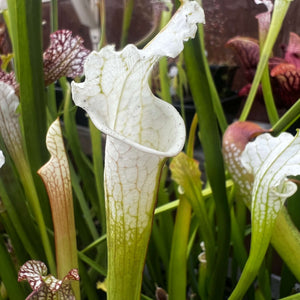
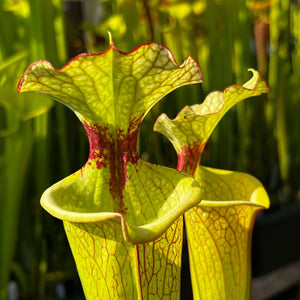
Plant photos above are of our Sarracenia flava var. atropurpurea (Santa Rosa Beach, Walton County, Florida) mother plants. Divisions are taken from the mother plants and are planted into 9cm pots to be sold. Division sizes can vary greatly and will always be sent largest first. If you'd like to know the size of a plant before ordering, please feel free to contact us.

Sarracenia flava var. atropurpurea (Santa Rosa Beach, Walton County, Florida)

Basic Sarracenia Care

Sarracenia flava var. atropurpurea (Santa Rosa Beach, Walton County, Florida) is easy to care for, given the correct conditions. An unheated greenhouse is an ideal location. Here are the 3 golden rules for healthy Sarracenia pitcher plants.

  1. Provide as much sun as possible.
  2. Keep their pots sat in 1-2cm of rainwater.
  3. Use acidic soil. A 1:1 peat moss & perlite mix is typical.

Take a look at our full, in-depth guide for more information.

FAQs

What makes sarracenia flava var. atropurpurea different to other sarracenia flava varieties?

Sarracenia flava var. atropurpurea differs from other Sarracenia flava varieties by its striking, deep red-to-maroon pigmentation that covers the entire pitcher tube, throat, and lid when grown in full sun.

How tall do Sarracenia flava get?

Sarracenia flava typically grows 45cm to 90cm feet tall. This varies dependant on the specific plant, growing conditions and seasonal variations.

Can I grow Sarracenia outdoors in the UK?

Yes, most Sarracenia species are fully frost-tolerant and can live outside all year round in UK gardens, bog gardens, or patio pots. Species such as leucophylla and psittacina can be more sensitive and usually fare better in an unheated greenhouse.

How do I water Sarracenia?
  • March–October: Stand the plant pot in a saucer or tray containing 1 to 3 cm of rainwater (or more when the weather's really warm). The soil should never be allowed to dry out.
  • November–February: Keep the soil just damp, reducing the standing water significantly while they rest.
Can I use tapwater for Sarracenia?

No, unless you live in a very soft water area (<50ppm) do not use tapwater. Regular tap water contains minerals, lime, and chlorine that burn and kill the roots over time.
Always use collected rainwater, distilled water, or reverse-osmosis (RO) water.

Do Sarracenia need winter dormancy?

Yes, Sarracenia need a cold winter rest period (roughly from Halloween to Valentine's Day) with lower temperatures (unheated greenhouses, cold frames, or bright sheds). Their old pitchers will turn brown and die back; this is completely natural. Trim away dead growth in late winter to prevent mould (botrytis).

Read more here: How to Keep Your Sarracenia Healthy Through Winter Dormancy