
WhatsApp
Send us a message
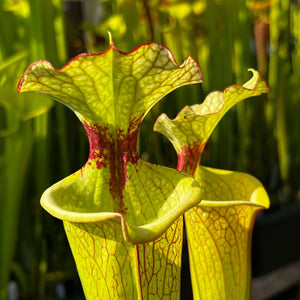
This lidless form of Sarracenia flava var. ornata is an unusual variation of the ornate yellow pitcher plant. Unlike typical Sarracenia flava, whic...
View full detailsSarracenia flava var. ornata 'Super Ornata'
Sarracenia flava var. ornata 'Outlaw' is a distinct clone from a specific, threatened locality in western Bay County, Florida. Its origin separates...
View full detailsSarracenia flava var. ornata MS-F221
Sarracenia flava var. ornata (Wewahitchka, Florida)
Sarracenia flava var. ornata F433 is a location-specific form originating from the Green Swamp in North Carolina. It shows the heavy vertical venat...
View full detailsSarracenia flava var. ornata (Sandy Creek Road, Bay County, Florida)
Sarracenia flava var. ornata 'Killer' is a distinct flava originating from a specific locality in Okaloosa County, Florida. Its genetic background ...
View full details
 Sold out
Sarracenia flava var. ornata - Maroon Throat (Apalachicola National Forest, Florida) MK-F88
Sold out
Sarracenia flava var. ornata - Maroon Throat (Apalachicola National Forest, Florida) MK-F88
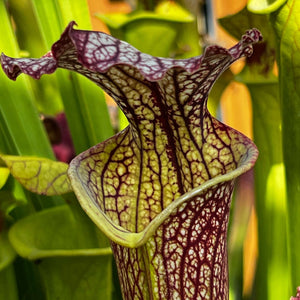
Arguably one of the best Sarracenia flava var. ornata available. This is a sturdy, vigorous Sarracenia flava with strong colouration making it a st...
View full detailsA nice example of a Sarracenia flava var. ornata from Florida. As per the varietal name 'ornata', this Sarracenia flava displays ornata red veins t...
View full detailsJS-F35
A vigorous example of Sarracenia flava var. ornata from Virginia. The pitchers are the classic flava shape with generally fine red veination. For u...
View full details