
WhatsApp
Send us a message
This is one of our favourite Sarracenia alata! The pitchers of this clone of Sarracenia alata var. rubrioperculata develop a strong red colour maki...
View full detailsMK-L45
Sarracenia × moorei 'Santa Rosa Big Mouth' from Santa Rosa County, Florida, is a tall plant with pitchers that often reach 70 to 80 cm. The name fi...
View full detailsSarracenia 'Adrian Slack' is a carnivorous plant named in tribute to the renowned Sarracenia grower, Adrian Slack. Although the exact parentage of ...
View full detailsPossibly the most handsome Sarracenia flava var. maxima out there! This Sarracenia flava was selected by Matt Soper of Hampshire Carnivorous Plants...
View full detailsSarracenia alata var. alata f. viridescens (Washington County, Alabama) is an anthocyanin-free form of the pale pitcher plant. Unlike typical alata...
View full detailsSarracenia flava var. rubricorpora F25 (Apalachicola National Forest, Florida) is a selected red tube form from one of the most famous Sarracenia r...
View full detailsSarracenia flava var. cuprea (Shallotte, Brunswick County, North Carolina) is a copper-lidded form from the coastal plain of North Carolina. Plants...
View full detailsHere's an interesting Sarracenia alata! This is an areolate form which is relatively unusual for this species. Areoles are small windows on the pi...
View full detailsThis is an attractive Sarracenia oreophila both in shape and pattern. As the name suggests it is heavily veined with the veins getting darker as th...
View full detailsBeautifully blushed with copper on the lid, this Sarracenia flava var. cuprea is a great example of a classic copper-top Sarracenia flava. A vigoro...
View full detailsMK-RA3
This is an excellent example of a typical phenotype Sarracenia oreophila var. oreophila! The pitchers are a delicious lime green colour with a slig...
View full detailsOriginally from the national collection of Paul & Jackie Gardner of P&J Plants (F RUG 01) this is a fantastic cut-throat Sarracenia flava! ...
View full detailsThis is a vigorous-growing copper-topped Sarracenia flava var. cuprea. The pitcher hoods are large with the cuprea blushing on the top. A really ni...
View full detailsAs its name suggests, this is one veiny Sarracenia alata! The green pitchers are jam-packed with fine red veins making them a stand-out alata. If y...
View full detailsSarracenia 'Leah Wilkerson' is a naturally occurring hybrid that was found in a bog on private property in Walton County, Florida. This Sarracenia ...
View full detailsA nice-sized, attractive Sarracenia × moorei showing characteristics of both parents. The flower is a beautiful two-toned colour, taking more influ...
View full detailsThis Sarracenia alata var. alata is a pubescent form of Sarracenia from Perdido in Alabama (the Eastern part of Sarracenia alata's natural range), ...
View full details
 Sold out
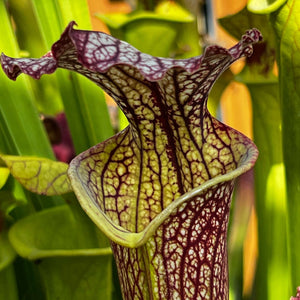
Sarracenia flava var. ornata - Maroon Throat (Apalachicola National Forest, Florida) MK-F88
Sold out
Sarracenia flava var. ornata - Maroon Throat (Apalachicola National Forest, Florida) MK-F88
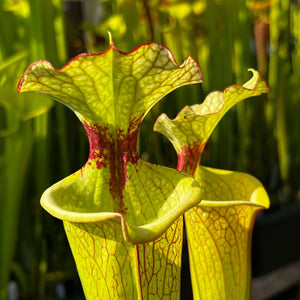
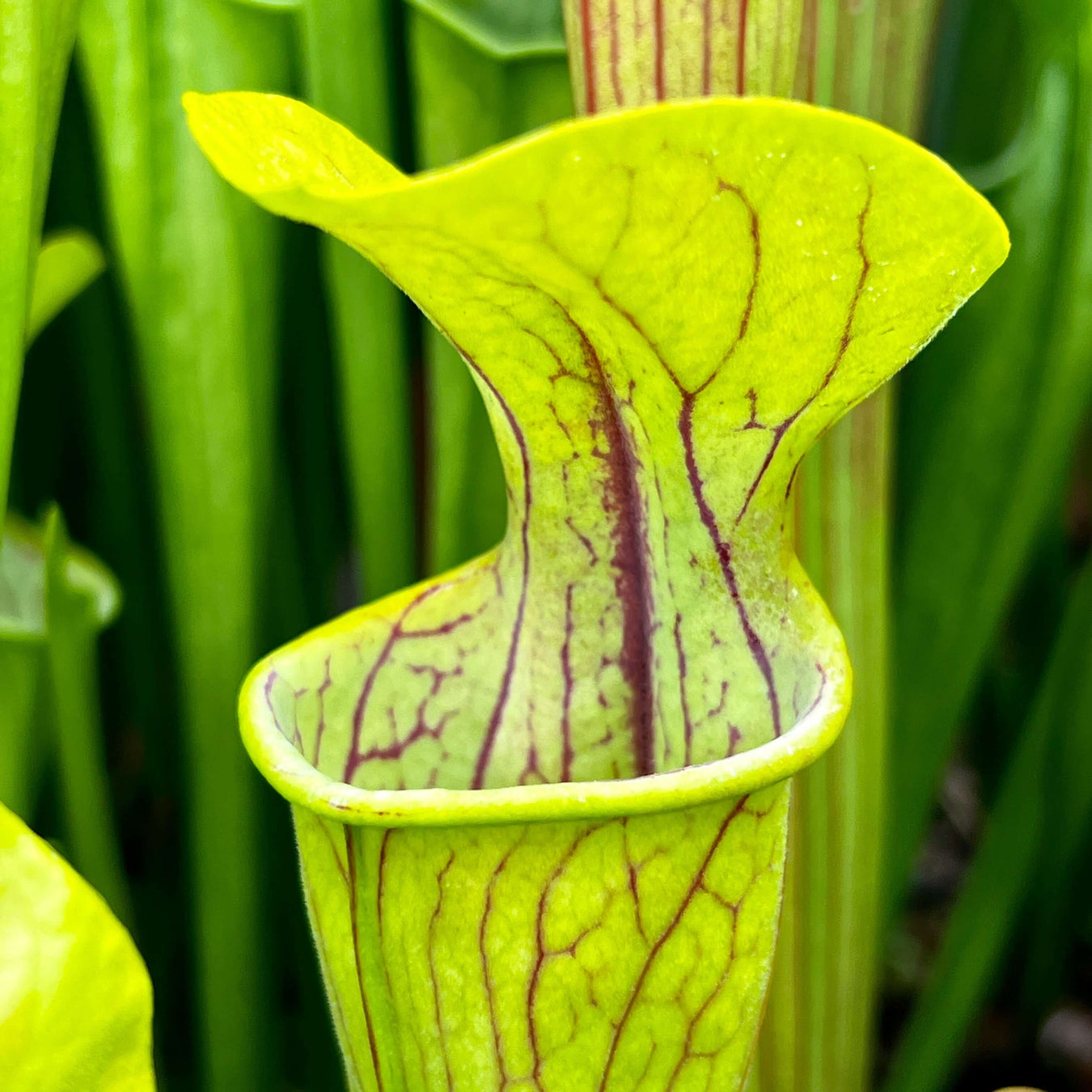
Arguably one of the best Sarracenia flava var. ornata available. This is a sturdy, vigorous Sarracenia flava with strong colouration making it a st...
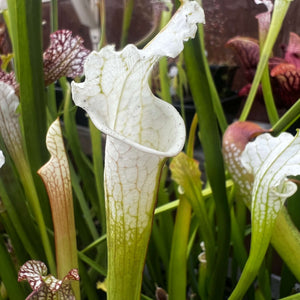
View full detailsSarracenia leucophylla var. leucophylla - Purple & White Giant (Rt71, Altha, Calhoun County, Florida)
Cuprea translates from Latin to mean 'copper'. It's easy to see why this name has been given to this variety of Sarracenia flava, the operculum (li...
View full detailsMK-L7
JS-F130