
WhatsApp
Send us a message
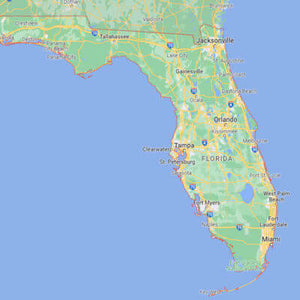
The range of Sarracenia purpurea, also known as the purple pitcher plant, includes the east coast of the USA, the Great Lakes region, most of Canada, Washington state, and even Alaska. This is the most widely distributed species of Sarracenia which also includes established naturalised populations in Europe.
There are two subspecies: Sarracenia purpurea subsp. purpurea and Sarracenia purpurea subsp. venosa. The former populates colder regions with the latter confined to the southern states. Sarracenia purpurea subsp. venosa is further divided into a few different varieties: Sarracenia purpurea subsp. venosa var. venosa, Sarracenia purpurea subsp. venosa var. burkii and finally Sarracenia purpurea subsp. venosa var. montana.
Sarracenia purpurea subsp. venosa var. burkii is considered to be a species in its own right with the species name Sarracenia rosea. Read more about that here - Sarracenia rosea or Sarracenia purpurea subsp. venosa var. burkii?
Sarracenia purpurea ssp. purpurea (Algonquin Provincial Park, Ontario, Canada)
Sarracenia purpurea 'Sorrow' is a unique cultivar with striking pigmentation differences from typical Sarracenia purpurea subsp. purpurea. It origi...
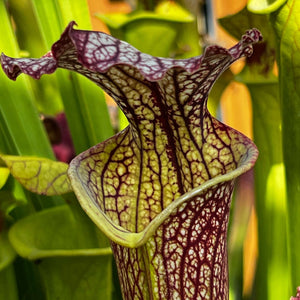
View full detailsThis Sarracenia purpurea subsp. venosa var. burkii (Sarracenia rosea) from Bay County, North Florida, is a large-growing Gulf Coast form with a cle...
View full detailsSarracenia purpurea - Intergrade Form (Pakim Pond, New Jersey)
Sarracenia purpurea subsp. venosa 'Sylwia'
MK-PV57
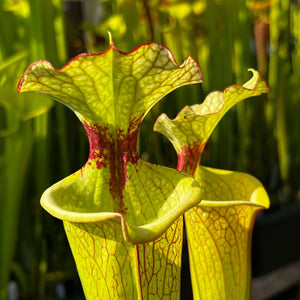
Sarracenia purpurea subsp. venosa var. burkii f. luteola
MK-PV48
Sarracenia purpurea subsp. venosa var. montana (Jackson County, North Carolina)
Sarracenia purpurea subsp. venosa var. montana (Tom's Swamp, Rabun County, Georgia)
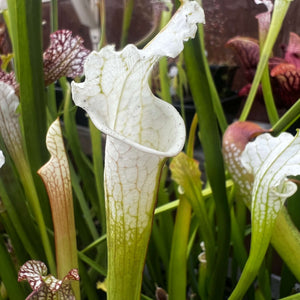
Sarracenia purpurea subsp. venosa var. venosa f. pallidiflora is a rare anthocyanin-free form of the southern purple pitcher plant. Stewart McPhers...
View full detailsOne of the giants! The 'Chipola Giant' Sarracenia purpurea subsp venosa var. burkii (or Sarracenia rosea if you prefer) clones are real show-stoppe...
View full detailsSarracenia purpurea, being native to the North America continent, should not be expected to be found growing wild in Ireland. However, there are po...
View full detailsSarracenia purpurea 'Chipola Giant' is a name given to a few clones of giant Sarracenia purpurea subsp. venosa var. burkii (Sarracenia rosea) origi...
View full detailsMK-PV41
In 1999, seeds of Sarracenia purpurea subsp. venosa were successfully germinated at the University of California. After several years of cultivatio...
View full detailsSarracenia purpurea subsp. venosa ‘Gigantea’ is a selected form of Sarracenia purpurea distributed through Triffid Nurseries. It represents a large...
View full detailsSarracenia purpurea subsp. purpurea var. riplicola (Bruce Peninsula, Ontario, Canada) MK-PP14
Sarracenia purpurea subsp. purpurea (Near Durham, Grey County, Ontario, Canada)
Sarracenia purpurea subsp. purpurea (Wareham Forest, Dorset, UK) represents a naturalised population established in southern England. Originally na...
View full details