

Sarracenia purpurea (Roscommon, Ireland) | Carnivorous Plant Skip to content

Sarracenia purpurea subsp. purpurea (County Roscommon, Ireland)

Availability:
Out of stock
Sold out
Original price £12.99 - Original price £12.99
Original price
£12.99
£12.99 - £12.99
Current price £12.99
Supplied in a 9cm Pot

Your plant will arrive potted, in a carnivorous plant soil perfect for Sarracenia.

Seasonal Information

20.03.26 - Sarracenia are just starting to emerge from Winter dormancy. Some plants, depending on species, will still show no signs of new growth, some will have flower buds, and others may have new pitchers starting to grow

Delivery Information

Delivery from £4.99 (mainland UK). We aim to dispatch orders within 2 working days.

Description of Sarracenia purpurea subsp. purpurea (County Roscommon, Ireland)

Sarracenia purpurea, being native to the North America continent, should not be expected to be found growing wild in Ireland. However, there are populations of Sarracenia purpurea subsp. purpurea that have naturalised into County Roscommon! 

In appearance, it looks much like other purpureas. It does grow noticeably rapidly compared to others in the collection. As you would expect, being naturalised in Ireland, it also grows great outside of the greenhouse. It is the ideal candidate for a bog garden or container that is exposed to the UK weather!

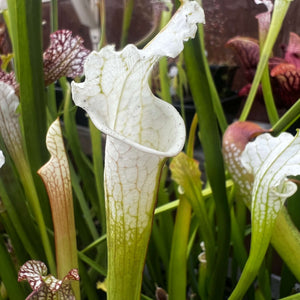
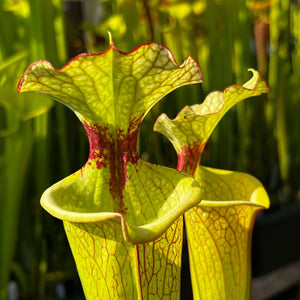
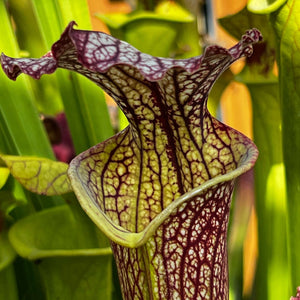
Plant photos above are of our Sarracenia purpurea subsp. purpurea (County Roscommon, Ireland) mother plants. Divisions are taken from the mother plants and are planted into 9cm pots to be sold. Division sizes can vary greatly and will always be sent largest first. If you'd like to know the size of a plant before ordering, please feel free to contact us.

Sarracenia Pupurea Subsp. Purpurea (County Roscommon Ireland)

Basic Sarracenia Care

Sarracenia purpurea subsp. purpurea (County Roscommon, Ireland) is easy to care for, given the correct conditions. An unheated greenhouse is an ideal location. Here are the 3 golden rules for healthy Sarracenia pitcher plants.

  1. Provide as much sun as possible.
  2. Keep their pots sat in 1-2cm of rainwater.
  3. Use acidic soil. A 1:1 peat moss & perlite mix is typical.

Take a look at our full, in-depth guide for more information.