
WhatsApp
Send us a message
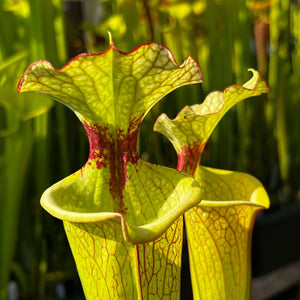
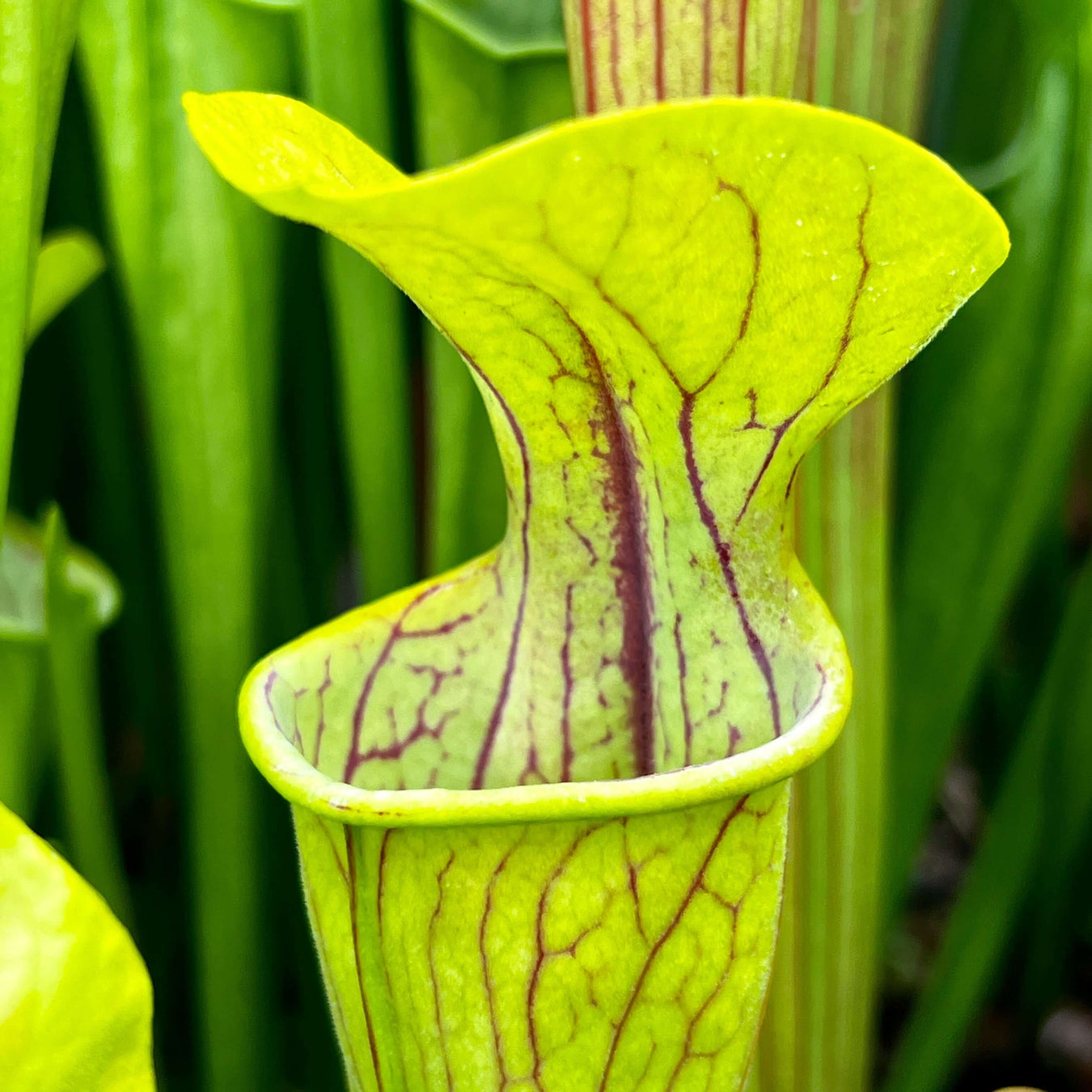
The clue's in the name with this Sarracenia flava! This one's a whopper and is the largest Sarracenia flava var. flava in the collection. The pitch...
View full detailsThere aren't many anthocyanin-free (no red) forms of Sarracenia Flava in cultivation and this particular clone is a beauty.
MS-F3
MK-F27B
MK-A3
Sarracenia alata var. atrorubra - Large, Wide, Red Lid (DeSoto County, Mississippi)
JS-A13
Sarracenia alata var. alata (Ocean City, Jackson County, Mississippi)
Sarracenia alata var. alata (Harrison County, Mississippi)
This clone of S. alata var. nigropurpurea is known for its distinct black-coloured tubes, with genetics from a site at the intersection of state ro...
View full detailsSarracenia alata var. cuprea (Deer Park, Washington County, Alabama)
Giant to 28"
Sarracenia flava f. viridescens (Shallotte, Brunswick County, North Carolina)
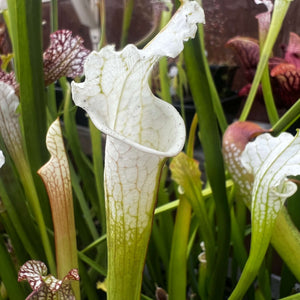
The 'Hurricane Creek' cultivar name can be applied to Sarracenia leucophylla var. alba clones, or their seeds, that were found at the Hurricane Cre...
View full detailsThe 'Hurricane Creek' cultivar name can be applied to Sarracenia leucophylla var. alba clones, or their seeds, that were found at the Hurricane Cre...
View full detailsSarracenia oreophila var. oreophila (Boaz, Etowah County, Alabama)
Sarracenia psittacina var. psittacina f. viridescens (Wewahitchka, Gulf County, Florida)
The 'Hurricane Creek' cultivar name can be applied to Sarracenia leucophylla var. alba clones, or their seeds, that were found at the Hurricane Cre...
View full detailsSarracenia leucophylla var. leucophylla (Gas Station Site, Perdido, Alabama)
This Sarracenia purpurea subsp. venosa var. burkii (Sarracenia rosea) from Bay County, North Florida, is a large-growing Gulf Coast form with a cle...
View full detailsSarracenia purpurea ssp. purpurea (Algonquin Provincial Park, Ontario, Canada)
Sarracenia purpurea subsp. purpurea var. riplicola (Bruce Peninsula, Ontario, Canada) MK-PP14
Sarracenia leucophylla L3 Giant is an impressive Sarracenia with location genetics from Citronelle, Alabama. This plant is known for its imposing s...
View full detailsThe 'Hurricane Creek' cultivar name can be applied to Sarracenia leucophylla var. alba clones, or their seeds, that were found at the Hurricane Cre...
View full details