
WhatsApp
Send us a message
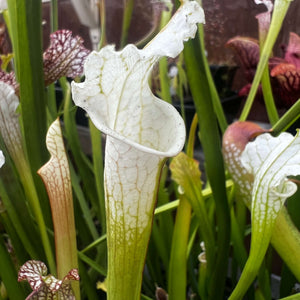
Pubescent form Sarracenia are the ones with the velvety-soft, furry pitchers that feel so nice to touch! These can include plants from the species Sarracenia alata, Sarracenia leucophylla and some hybrids that they create.
For more furry Sarracenia, check out Sarracenia purpurea subsp. venosa which are not considered pubescent form as their pitchers are typical of the subspecies.
This Sarracenia alata var. alata is a pubescent form of Sarracenia from Perdido in Alabama (the Eastern part of Sarracenia alata's natural range), ...
View full detailsSarracenia alata var. alata f. viridescens (Washington County, Alabama) is an anthocyanin-free form of the pale pitcher plant. Unlike typical alata...
View full detailsSarracenia ‘Pink Thing’ × alata ‘Blacktube Pubescent’ is a hybrid that combines the pale patterning and pink colouration of Sarracenia ‘Pink Thing’...
View full detailsLooking for a Sarracenia that's as cunning as a fox who's just been appointed Professor of Cunning at Oxford University? You've come to the right p...
View full detailsSarracenia × moorei (SL26 X SFA12)
MK-L7
A stunning Sarracenia hybrid, arguably one of the best created and certainly one of our favourites! Sarracenia 'Iamsatyricon' was grown from seed i...
View full details