WhatsApp Chat
Send us a message
A selection of Sarracenia plants, or their seeds, that originated from the state of Alabama in the United States. Location data is essential for helping collectors be a vital store of regional Sarracenia genetics, particularly where natural habitats are endangered or have already been destroyed.
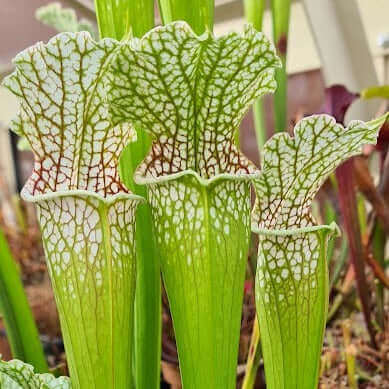
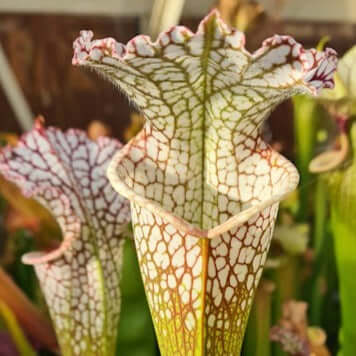
Alabama provides natural habitats to Sarracenia alata, Sarracenia flava, Sarracenia leucophylla, Sarracenia psittacina, Sarracenia rubra, Sarracenia alabamensis and Sarracenia rosea (Sarracenia purpurea subsp. venosa var. burkii).
Sarracenia alata var. alata f. viridescens (Washington County, Alabama) is an anthocyanin-free form of the pale pitcher plant. Unlike typical alata...
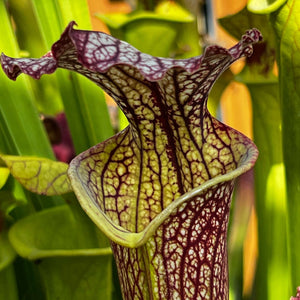
View full detailsThis is an attractive Sarracenia oreophila both in shape and pattern. As the name suggests it is heavily veined with the veins getting darker as th...
View full detailsMK-RA3
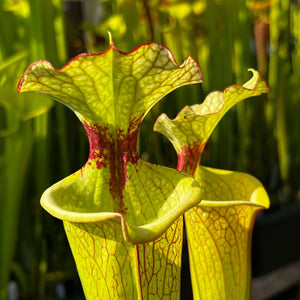
This is an excellent example of a typical phenotype Sarracenia oreophila var. oreophila! The pitchers are a delicious lime green colour with a slig...
View full detailsSarracenia leucophylla var. leucophylla (Citronelle, Alabama)
This Sarracenia alata var. alata is a pubescent form of Sarracenia from Perdido in Alabama (the Eastern part of Sarracenia alata's natural range), ...
View full detailsThe 'Hurricane Creek' cultivar name can be applied to Sarracenia leucophylla var. alba clones, or their seeds, that were found at the Hurricane Cre...
View full detailsSarracenia oreophila var. oreophila (Boaz, Etowah County, Alabama)
The 'Hurricane Creek' cultivar name can be applied to Sarracenia leucophylla var. alba clones, or their seeds, that were found at the Hurricane Cre...
View full detailsThe 'Hurricane Creek' cultivar name can be applied to Sarracenia leucophylla var. alba clones, or their seeds, that were found at the Hurricane Cre...
View full detailsSarracenia alata var. cuprea (Deer Park, Washington County, Alabama)
JS-RW1
MK-L39a
MK-L49B
MK-L45
The 'Hurricane Creek' cultivar name can be applied to Sarracenia leucophylla var. alba clones, or their seeds, that were found at the Hurricane Cre...
View full detailsThe 'Hurricane Creek' cultivar name can be applied to Sarracenia leucophylla var. alba clones, or their seeds, that were found at the Hurricane Cre...
View full detailsThe 'Hurricane Creek' cultivar name can be applied to Sarracenia leucophylla var. alba clones, or their seeds, that were found at the Hurricane Cre...
View full detailsThe 'Hurricane Creek' cultivar name can be applied to Sarracenia leucophylla var. alba clones, or their seeds, that were found at the Hurricane Cre...
View full detailsThe 'Hurricane Creek' cultivar name can be applied to Sarracenia leucophylla var. alba clones, or their seeds, that were found at the Hurricane Cre...
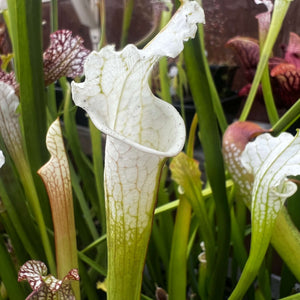
View full detailsThis plant is a rare, anthocyanin-free form of Sarracenia leucophylla. It originates from a specific location near Perdido in Alabama, USA. The 'vi...
View full detailsSarracenia leucophylla var. alba White Top (Baldwin County, Alabama)
MK-H362
MK-H384a