
WhatsApp
Send us a message
Sarracenia flava var. rubricorpora F25 (Apalachicola National Forest, Florida) is a selected red tube form from one of the most famous Sarracenia r...
View full detailsA cross of Sarracenia flava plants from two different sites in Florida: Blackwater and Wewahitchka. The seeds that produced this clone were origina...
View full detailsOriginally from the national collection of Paul & Jackie Gardner of P&J Plants (F RUG 01) this is a fantastic cut-throat Sarracenia flava! ...
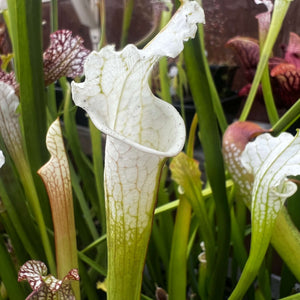
View full detailsThis Sarracenia alata var. alata from Jackson County in Florida is a classic Gulf Coast form of the pale pitcher plant. Populations from Jackson Co...
View full detailsSarracenia flava var. atropurpurea (Santa Rosa Beach, Walton County, Florida) is a dark, heavily pigmented form selected from the Florida panhandle...
View full detailsOne of the giants! The 'Chipola Giant' Sarracenia purpurea subsp venosa var. burkii (or Sarracenia rosea if you prefer) clones are real show-stoppe...
View full detailsSarracenia purpurea 'Chipola Giant' is a name given to a few clones of giant Sarracenia purpurea subsp. venosa var. burkii (Sarracenia rosea) origi...
View full detailsJS-F130

 Sold out
Sarracenia flava var. ornata - Maroon Throat (Apalachicola National Forest, Florida) MK-F88
Sold out
Sarracenia flava var. ornata - Maroon Throat (Apalachicola National Forest, Florida) MK-F88
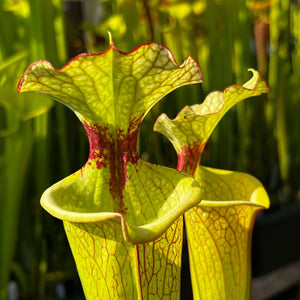
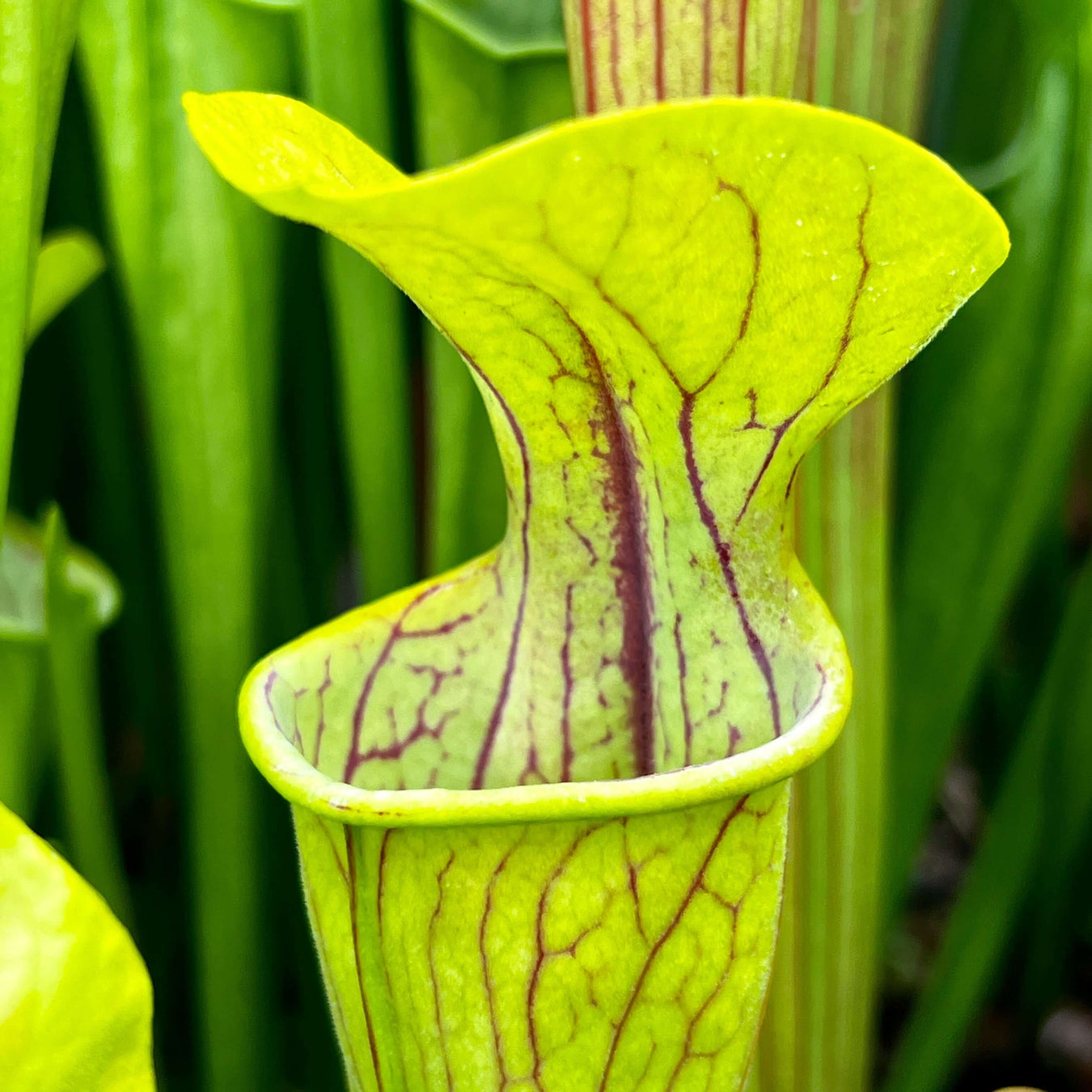
Arguably one of the best Sarracenia flava var. ornata available. This is a sturdy, vigorous Sarracenia flava with strong colouration making it a st...
View full detailsSarracenia leucophylla var. leucophylla - Purple & White Giant (Rt71, Altha, Calhoun County, Florida)
Sarracenia flava var. rubricorpora - Selfed Mike King Plant (Sumatra, Florida)
MK-RG6
Sarracenia leucophylla - Green & White (Milton County, Florida) MS-SL127
Sarracenia flava var. rugelii (Milton County, Florida) MK-F53
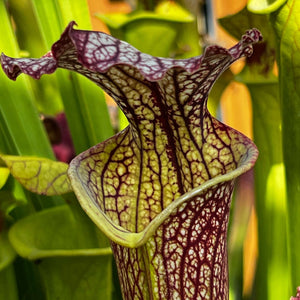
Sarracenia flava var. ornata 'Outlaw' is a distinct clone from a specific, threatened locality in western Bay County, Florida. Its origin separates...
View full detailsSarracenia flava var. ornata (Wewahitchka, Florida)
Sarracenia flava var. atropurpurea (Blackwater, Florida)
MK-F27B
MS-F3
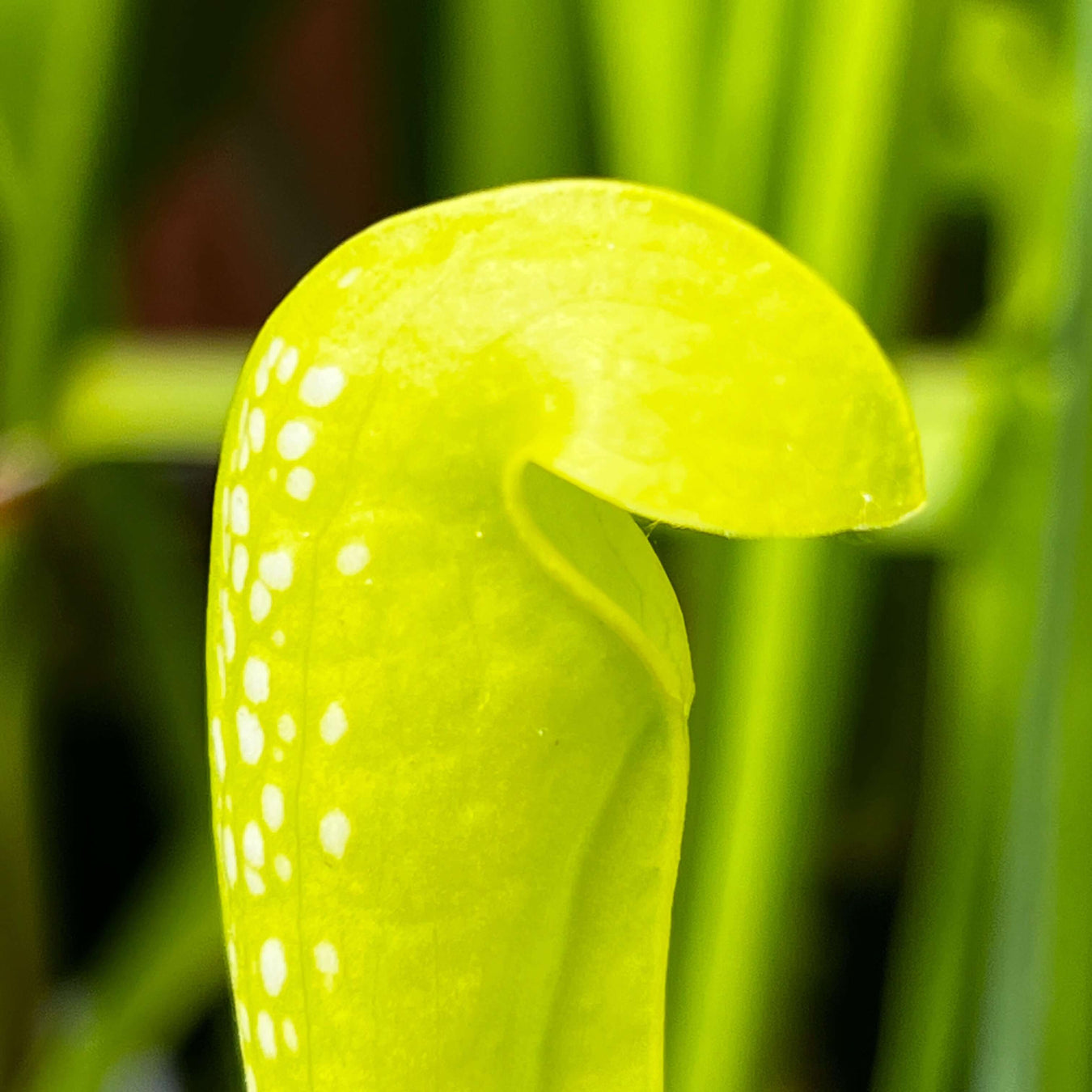
There aren't many anthocyanin-free (no red) forms of Sarracenia Flava in cultivation and this particular clone is a beauty.
Sarracenia flava var. ornata 'Killer' is a distinct flava originating from a specific locality in Okaloosa County, Florida. Its genetic background ...
View full detailsSarracenia flava var. ornata (Sandy Creek Road, Bay County, Florida)
JS-F22, IP-F13
MK-F149