
WhatsApp
Send us a message
Sarracenia × moorei 'Santa Rosa Big Mouth' from Santa Rosa County, Florida, is a tall plant with pitchers that often reach 70 to 80 cm. The name fi...
View full detailsSarracenia 'Adrian Slack' is a carnivorous plant named in tribute to the renowned Sarracenia grower, Adrian Slack. Although the exact parentage of ...
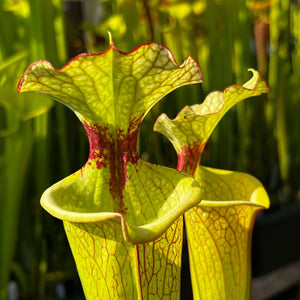
View full detailsSarracenia flava var. rubricorpora F25 (Apalachicola National Forest, Florida) is a selected red tube form from one of the most famous Sarracenia r...
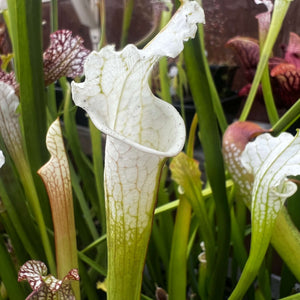
View full detailsThis Sarracenia alata var. alata from Jackson County in Florida is a classic Gulf Coast form of the pale pitcher plant. Populations from Jackson Co...
View full detailsOriginally from the national collection of Paul & Jackie Gardner of P&J Plants (F RUG 01) this is a fantastic cut-throat Sarracenia flava! ...
View full detailsA cross of Sarracenia flava plants from two different sites in Florida: Blackwater and Wewahitchka. The seeds that produced this clone were origina...
View full detailsSarracenia 'Leah Wilkerson' is a naturally occurring hybrid that was found in a bog on private property in Walton County, Florida. This Sarracenia ...
View full detailsA nice-sized, attractive Sarracenia × moorei showing characteristics of both parents. The flower is a beautiful two-toned colour, taking more influ...
View full detailsSarracenia flava var. atropurpurea (Blackwater, Florida)
MK-F27B
MS-F3
Sarracenia × moorei - Red Lip (Baker, Florida) MK-H88
PZ10 G4 H406
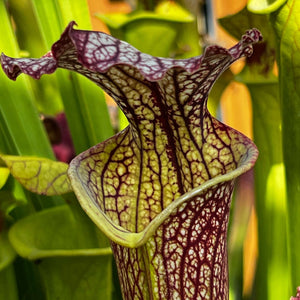
Sarracenia flava var. atropurpurea (Santa Rosa Beach, Walton County, Florida) is a dark, heavily pigmented form selected from the Florida panhandle...
View full detailsSarracenia × moorei H404 (Pensacola Field, Florida) is a seed-grown selected Sarracenia × moorei by Matt Soper, and it's a beauty! Grown from seed ...
View full detailsJS-F22, IP-F13
Sarracenia flava var. ornata (Sandy Creek Road, Bay County, Florida)
Sarracenia flava var. ornata 'Killer' is a distinct flava originating from a specific locality in Okaloosa County, Florida. Its genetic background ...
View full detailsSarracenia flava var. rubricorpora - Selfed Mike King Plant (Sumatra, Florida)
MK-L18
MK-L83
MK-RG6
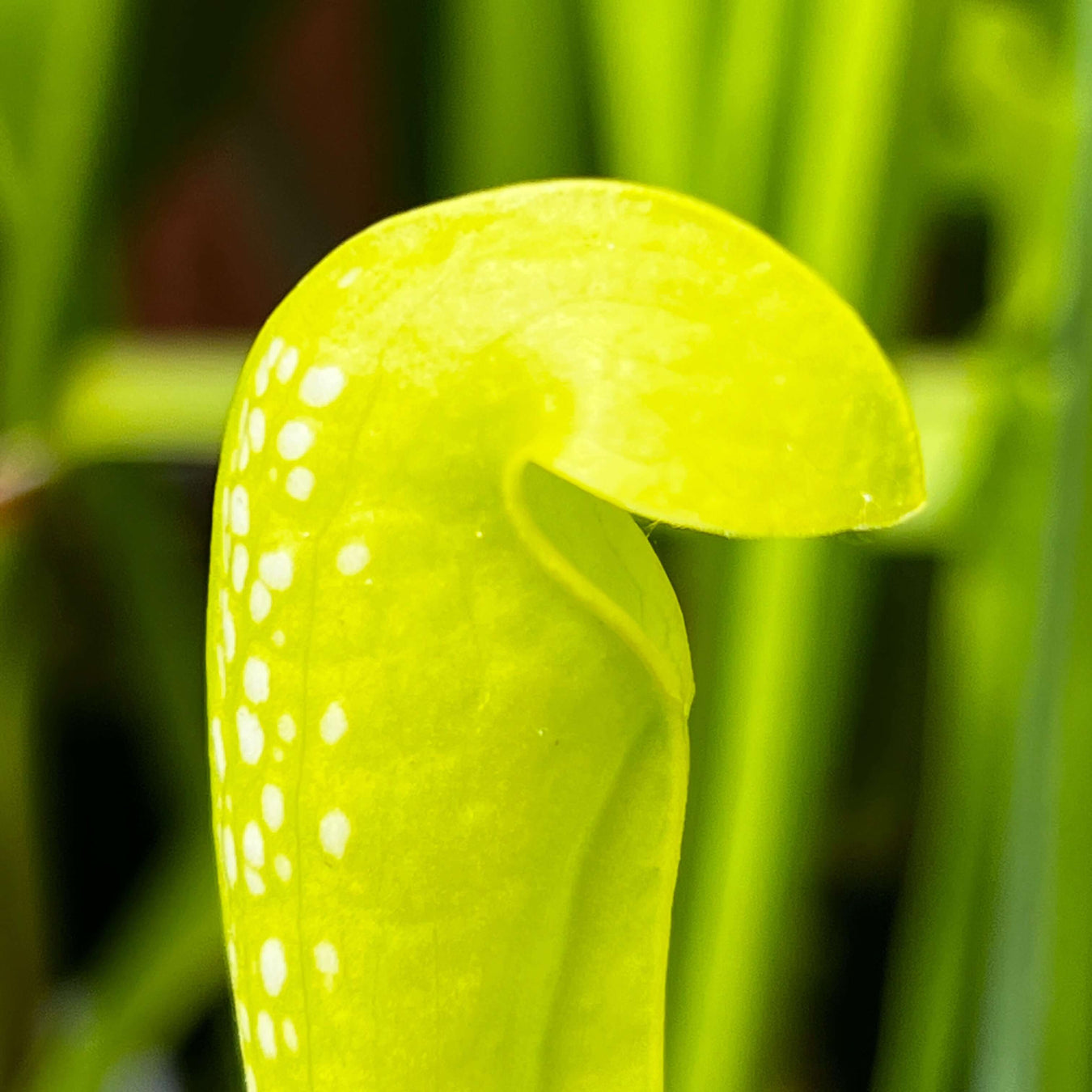
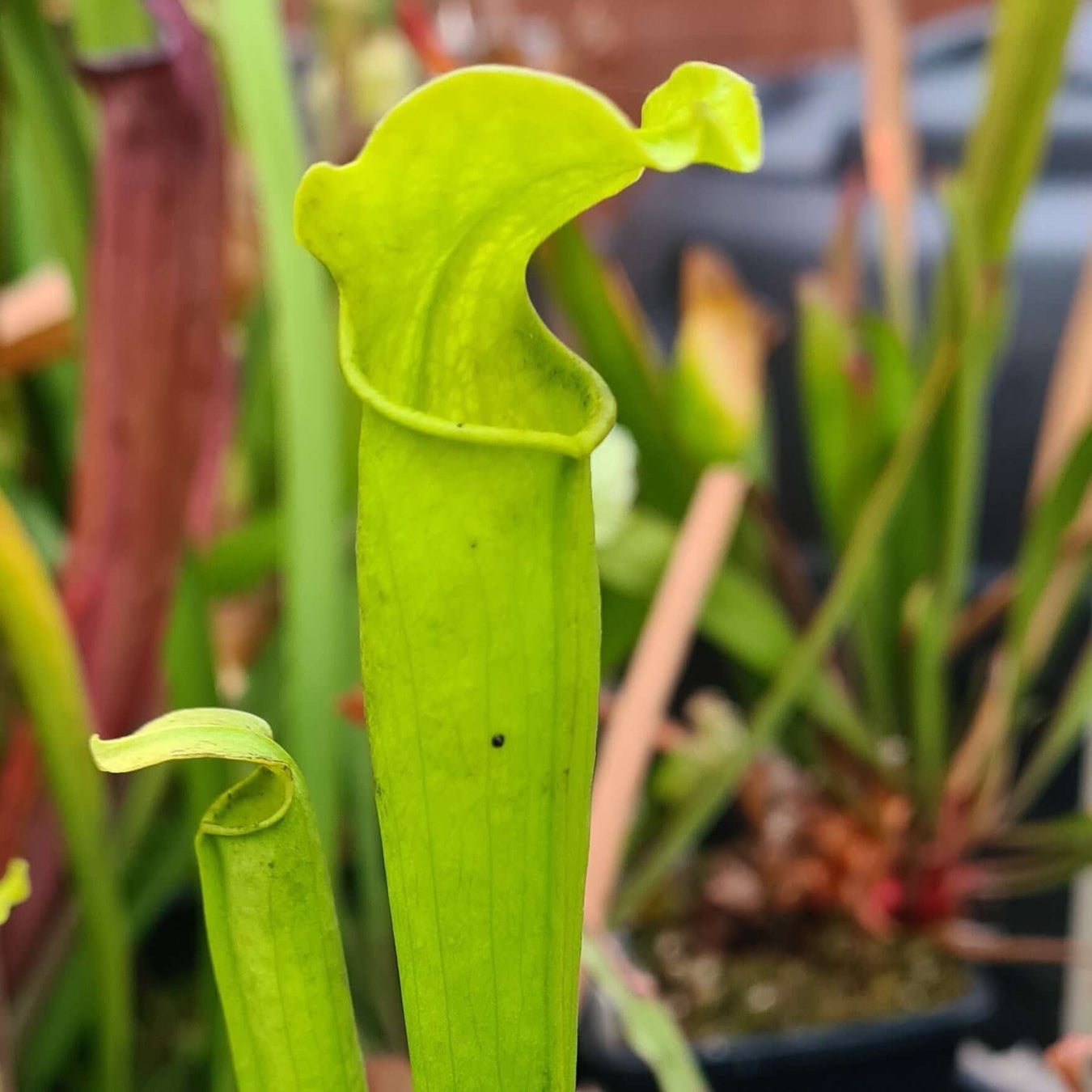
There aren't many anthocyanin-free (no red) forms of Sarracenia Flava in cultivation and this particular clone is a beauty.
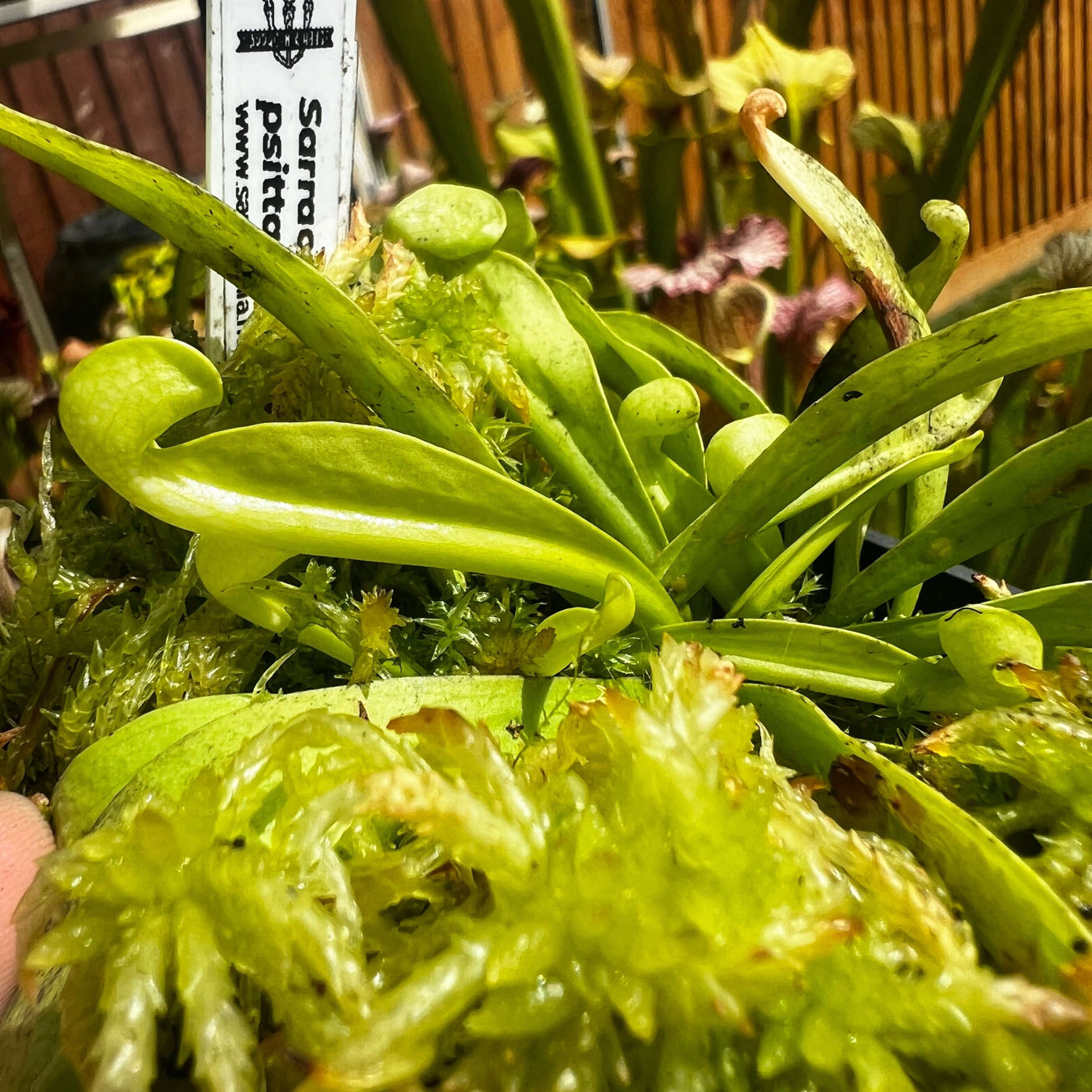
Sarracenia psittacina var. psittacina f. viridescens (Wewahitchka, Gulf County, Florida)