
WhatsApp
Send us a message
This is an attractive Sarracenia oreophila both in shape and pattern. As the name suggests it is heavily veined with the veins getting darker as th...
View full detailsSarracenia × miniata is a hybrid of Sarracenia minor and Sarracenia alata. Both parent species influence the shape of this plant with the distincti...
View full detailsThis vigorous clone of Sarracenia flava is a great plant if you want an easy-to-grow, nice-sized, and hard-as-nails Sarracenia flava var. flava. Th...
View full detailsBeautifully blushed with copper on the lid, this Sarracenia flava var. cuprea is a great example of a classic copper-top Sarracenia flava. A vigoro...
View full detailsThis Sarracenia alata var. alata from Jackson County in Florida is a classic Gulf Coast form of the pale pitcher plant. Populations from Jackson Co...
View full detailsMK-A67
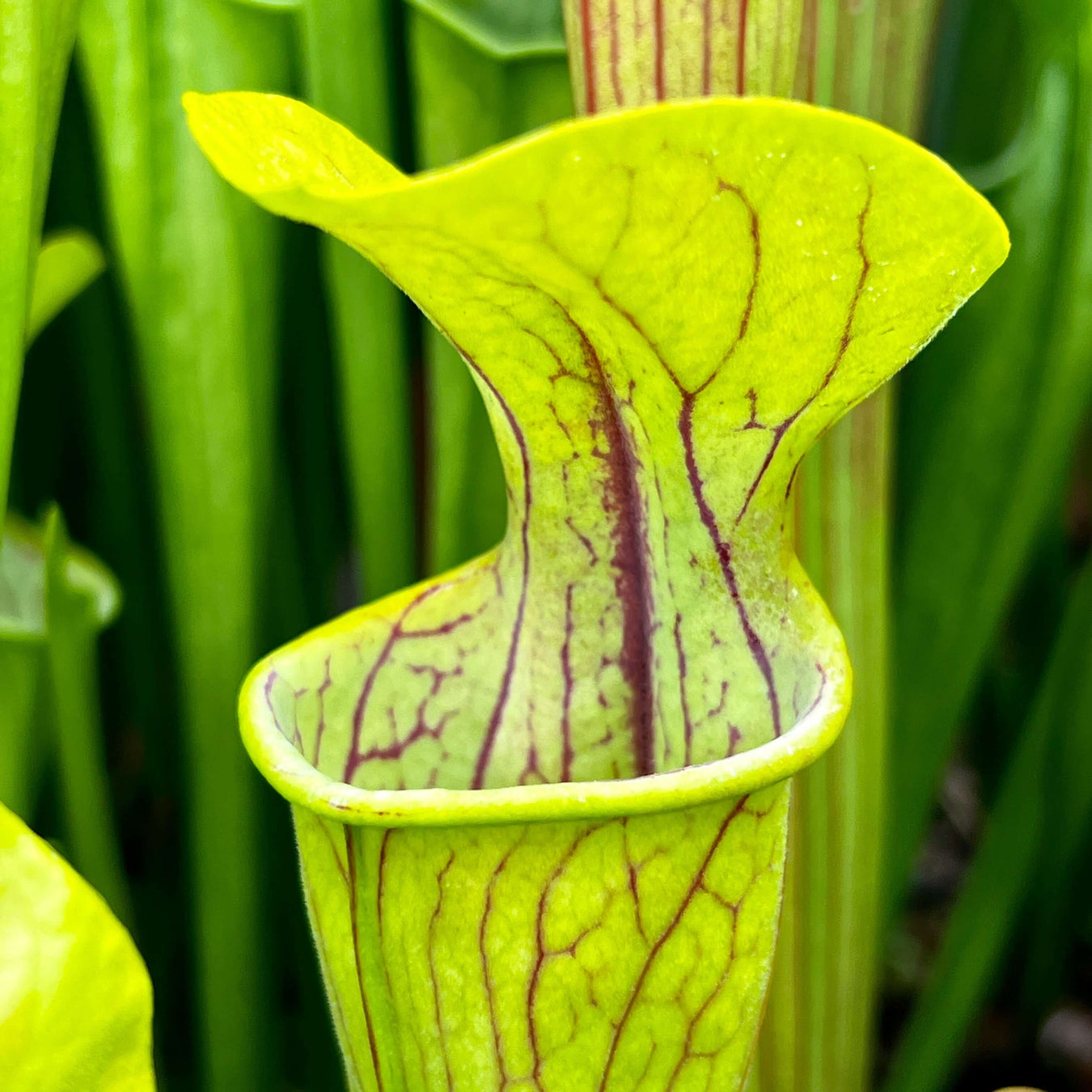
As its name suggests, this is one veiny Sarracenia alata! The green pitchers are jam-packed with fine red veins making them a stand-out alata. If y...
View full details
 Save 25%
Sarracenia alata var. rubrioperculata (Interstate 16/12, Desoto, Stone County, Mississippi)
Save 25%
Sarracenia alata var. rubrioperculata (Interstate 16/12, Desoto, Stone County, Mississippi)
This is one of our favourite Sarracenia alata! The pitchers of this clone of Sarracenia alata var. rubrioperculata develop a strong red colour maki...
View full detailsThis is a vigorous-growing copper-topped Sarracenia flava var. cuprea. The pitcher hoods are large with the cuprea blushing on the top. A really ni...
View full detailsSarracenia 'Joyce Cooper' is an attractive, vigorous Sarracenia hybrid. Nigel Hewitt-Cooper created it in 1999. He crossed an all-red form of Sarra...
View full detailsChris Rawlins bred Sarracenia 'Max Rawlings' by crossing S. leucophylla with S. × catesbaei and germinating the seed in the Spring of 1990. Both pa...
View full detailsThis is an attractive clone of copper-top Sarracenia flava. Relatively fast-growing, this flava can make a great display if left to fill a large po...
View full detailsOriginally from the national collection of Paul & Jackie Gardner of P&J Plants (F RUG 01) this is a fantastic cut-throat Sarracenia flava! ...
View full detailsThis is an excellent example of a typical phenotype Sarracenia oreophila var. oreophila! The pitchers are a delicious lime green colour with a slig...
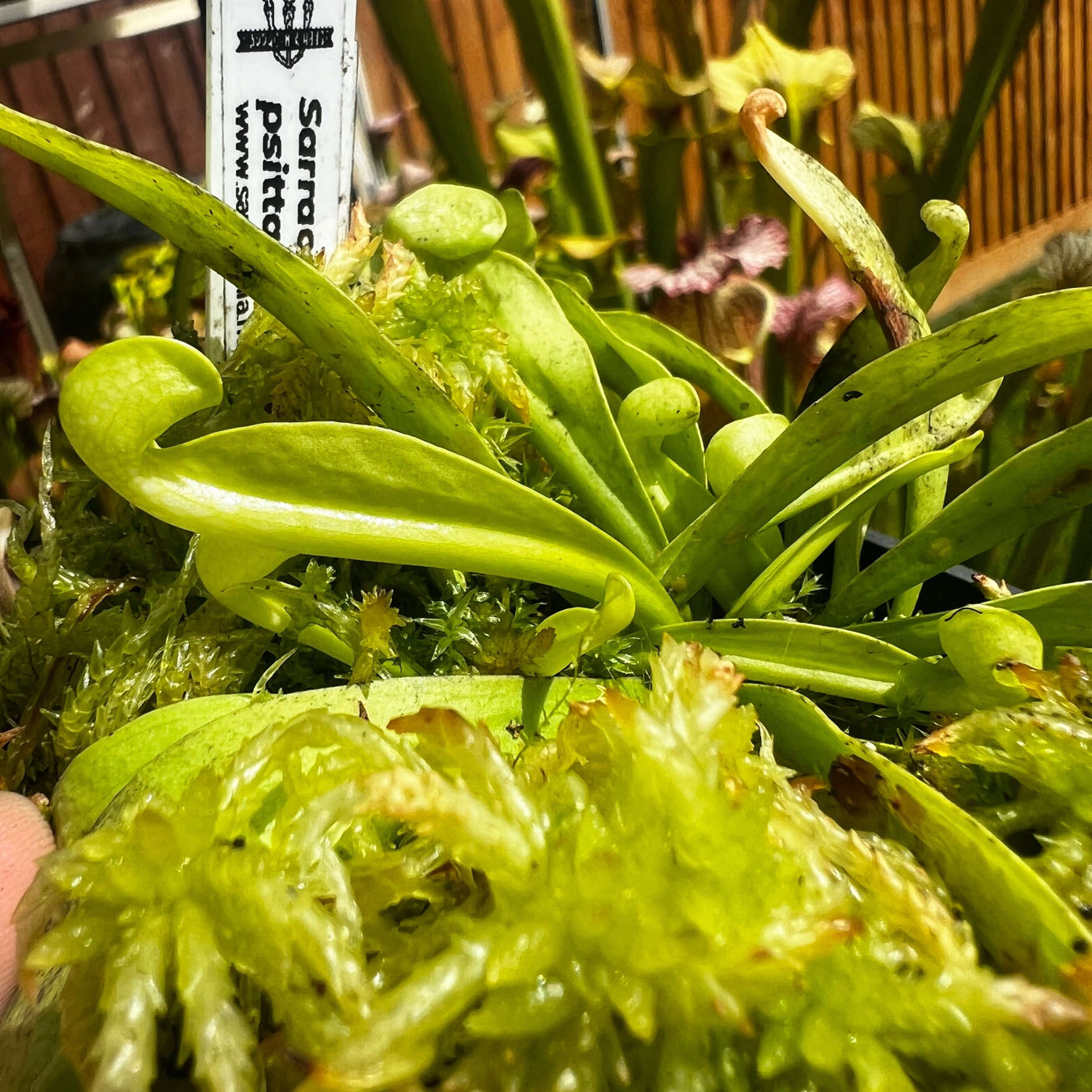
View full detailsThis is a really nice form of Sarracenia psittacina. The viridescens forms are anthocyanin free which means they do not contain any of the red pigm...
View full detailsMK-RA3
This bright little Sarracenia is the anthocyanin-free form of Sarracenia rubra subsp. gulfensis. This means that it contains no red pigmentation, m...
View full detailsA cross of Sarracenia flava plants from two different sites in Florida: Blackwater and Wewahitchka. The seeds that produced this clone were origina...
View full detailsSarracenia × miniata is a hybrid of Sarracenia minor and Sarracenia alata. This particular clone is from the holotype at Kew Gardens in London. Bot...
View full detailsBrook's Hybrid, or to give it its full name, Sarracenia × moorei 'Brooks Hybrid', is a hybrid of Sarracenia flava and Sarracenia leucophylla. It is...
View full detailsThis Sarracenia × moorei (Sarracenia flava X Sarracenia leucophylla) was selected and grown by renowned carnivorous plant grower Ian Salter in Wale...
View full detailsSarracenia 'Leah Wilkerson' is a naturally occurring hybrid that was found in a bog on private property in Walton County, Florida. This Sarracenia ...
View full detailsSarracenia × soperi (Sarracenia alata – Red Lid X Sarracenia flava var. ornata) is a classic hybrid by Adrian Slack. It combines the upright struct...
View full detailsNamed after well-known horticulturalist Roy Cheek at the 2018 RHS Hampton Court Flower Show by Matt Soper. This Sarracenia × soperi (S. alata X S. ...
View full details