
Skip to content

Dionaea muscipula BCP H15

Venus Flytrap
Availability:
in stock, ready to be shipped
Original price £9.99 - Original price £9.99
Original price
£9.99
£9.99 - £9.99
Current price £9.99
Supplied in a 9cm Pot

Your plant will arrive potted, in a carnivorous plant soil perfect for Sarracenia.

Seasonal Information

Dionaea are perennial plants. Heading into Winter, the Venus flytraps may have very few traps when purchased. Don't worry, they'll be back in the Spring!

Delivery Information

Delivery from £4.99 (mainland UK). We aim to dispatch orders within 2 working days.

Plant Description

Dionaea muscipula BCP H15 is a medium-sized Venus flytrap cultivar with distinctive traps. 

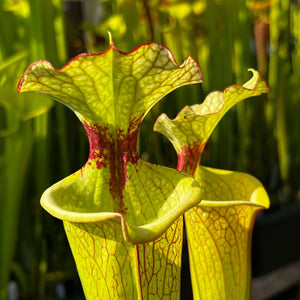
The traps are gently arched and display a rich red to orange central blotch that contrasts with the bright green outer lobes. Rather than filling the entire trap interior, the colour is concentrated towards the centre, creating a bold pattern that remains visible throughout the growing season. Under strong light, the contrast between the green margins and coloured interior becomes even more pronounced.

Long, slender cilia line the edges of each trap, adding to the elegant shape of the arched lobes. One of the more unusual characteristics of Dionaea muscipula BCP H15 is the presence of just two sensitive trigger hairs inside each trap lobe instead of the three that are normally found in Venus flytraps.

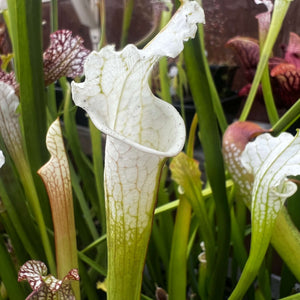
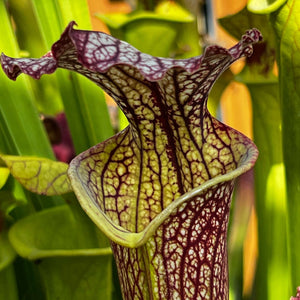
Plant photos above are of our Dionaea muscipula BCP H15 mother plants. Divisions are taken from the mother plants and are planted into 9cm pots to be sold. Division sizes can vary greatly and will always be sent largest first. If you'd like to know the size of a plant before ordering, please feel free to contact us.

Dionaea Muscipula Bcp H15

Basic Dionaea Care

Dionaea muscipula BCP H15 is easy to care for, given the correct conditions. An unheated greenhouse is an ideal location. Here are the 3 golden rules for healthy Venus flytraps.

  1. Provide as much sun as possible.
  2. Keep their pots sat in 1-2cm of rainwater.
  3. Use acidic soil. A 1:1 peat moss & perlite mix is typical.

Take a look at our full, in-depth guide for more information.