
WhatsApp
Send us a message
Sarracenia minor var. okefenokeensis is the giant variant of the species. The pitchers of this plant can grow up to a metre tall! Typical of Sarrac...
View full detailsMK-M18
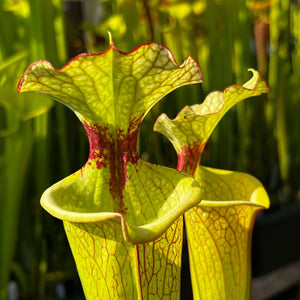
This is one tall Sarracenia flava var. rugelii! Given time, this plant can reach up to 36" tall making it a very impressive Sarracenia for any coll...
View full detailsSarracenia purpurea subsp. purpurea (Near Durham, Grey County, Ontario, Canada)
Sarracenia 'Mr Purple Haze' is a stunning purple (as you'd expect!) Sarracenia hybrid created by well-known Sarracenia growing Roy Cheek in the 199...
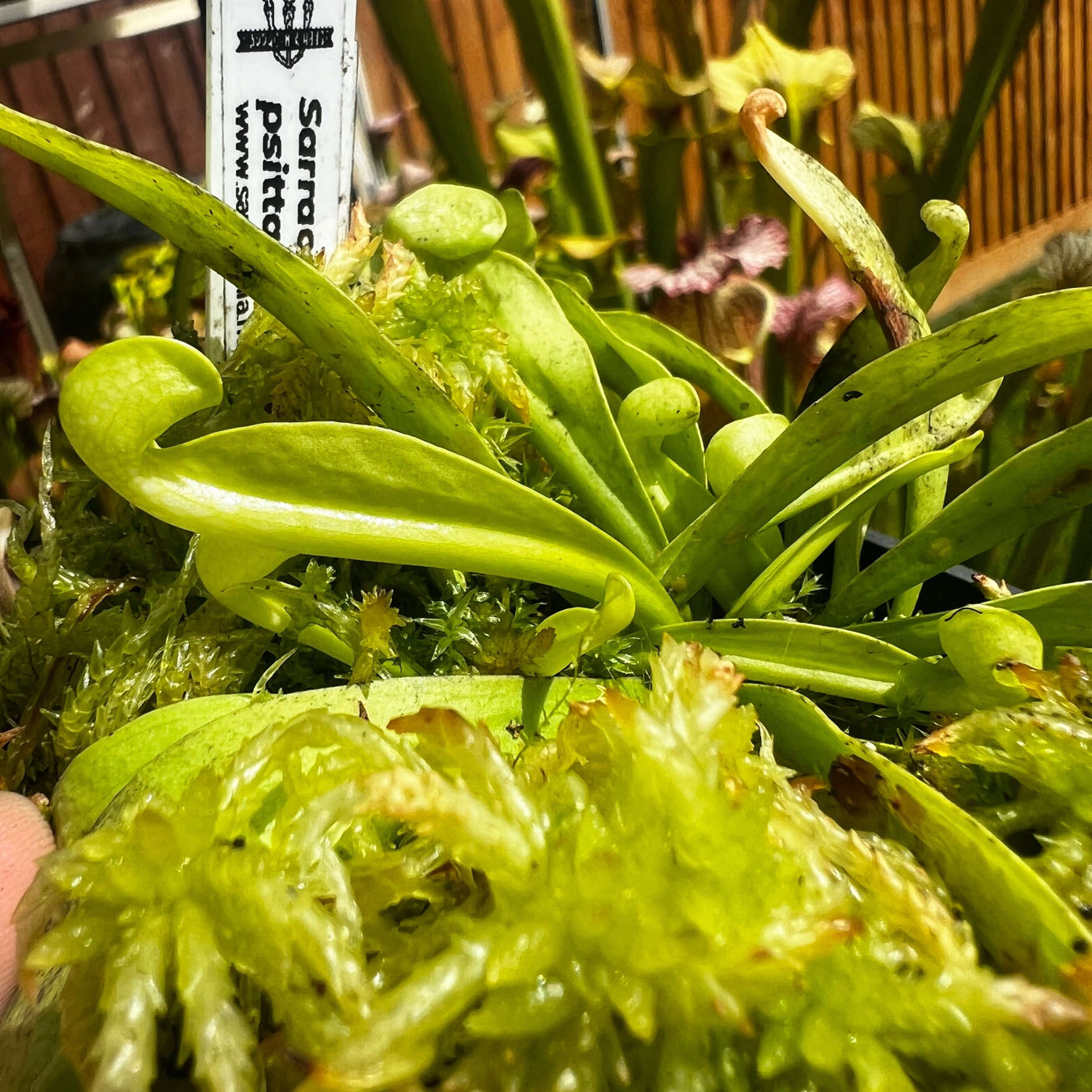
View full detailsSarracenia psittacina var. psittacina (George County, Alabama)
Sarracenia purpurea subsp. purpurea var. riplicola (Bruce Peninsula, Ontario, Canada) MK-PP14
Sarracenia purpurea subsp. venosa ‘Gigantea’ is a selected form of Sarracenia purpurea distributed through Triffid Nurseries. It represents a large...
View full detailsSarracenia 'Kagaribi' is a Japanese Sarracenia cultivar named after the word for bonfire, a fitting reference to its vivid red, fire-like colourati...
View full detailsThis clone of S. alata var. nigropurpurea is known for its distinct black-coloured tubes, with genetics from a site at the intersection of state ro...
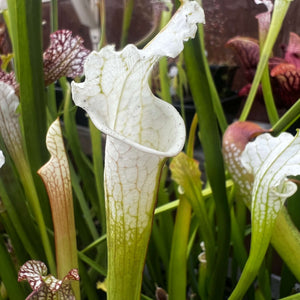
View full detailsSarracenia leucophylla var. alba - Christian Klein
MK-A3
Sarracenia ‘Alucard’ is a fascinating and mysterious carnivorous plant that is sure to capture anybody's attention. This complex hybrid of Sarracen...
View full detailsSarracenia leucophylla - Green & White (Milton County, Florida) MS-SL127
Sarracenia × moorei 'Leah Wilkerson' X × moorei 'Adrian Slack' - Laurens Eggen B Clone
This is one wild Sarracenia! With its large, skewiff mouth and flared hood Sarracenia 'Asbo' is sure to stand out in any collection. In the UK, ASB...
View full detailsSarracenia 'Leelou's' is a cultivated hybrid between Sarracenia × moorei 'Wilkerson's White Knight' and Sarracenia × moorei 'Wilkerson’s Red'. The ...
View full detailsThe 'Hurricane Creek' cultivar name can be applied to Sarracenia leucophylla var. alba clones, or their seeds, that were found at the Hurricane Cre...
View full detailsSarracenia 'Tapestry' is a striking hybrid, derived from Sarracenia oreophila, Sarracenia purpurea, and Sarracenia leucophylla. Named for its vivid...
View full detailsMK-H211
MK-H277
MK-H258
Sarracenia 'Sky Watcher' is a selected clone believed to originate from the complex hybrid Sarracenia umlauftiana. Its parentage combines S. courti...
View full detailsMK-H225