
WhatsApp
Send us a message
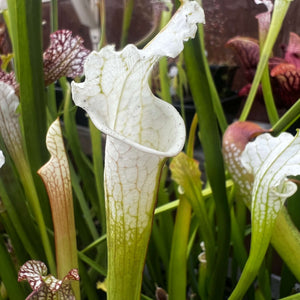
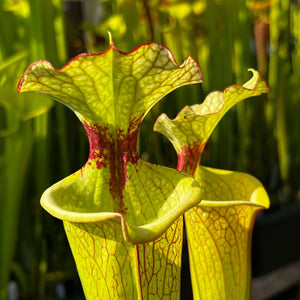
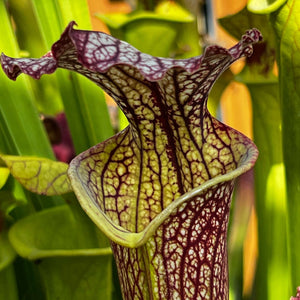
Sarracenia × moorei is a naturally occurring hybrid of Sarracenia flava and Sarracenia leucophylla. Due to the variation within both parent species, Sarracenia × moorei displays a vast array of colours and body shapes making it a favourite amongst collectors and hobbyists.
Two of the most famous Sarracenia hybrids, 'Leah Wilkerson' and 'Adrian Slack', are both registered cultivars of Sarracenia × moorei collected from the wild.
Sarracenia × moorei ‘Esme Cowlard’ is an attractive and distinctive Sarracenia hybrid raised by renowned British Sarracenia grower Mike King. Also ...
View full detailsMK-H362
MK-H211
Sarracenia × moorei H406 is a selected Gulf Coast form raised from seed originating near Milton, Florida. As a Sarracenia × moorei, it represents t...
View full detailsSarracenia × moorei 'Elizabeth Aydon'
Sarracenia × moorei 'John David King'
Sarracenia × moorei 'Leah Wilkerson' X × moorei 'Adrian Slack' - Laurens Eggen B Clone
This is one really elegant Sarracenia × moorei and a favourite in the collection! As a × moorei this plant is a cross between Sarracenia flava and ...
View full detailsSarracenia 'Atlas 5' was created when Mike King crossed Sarracenia × moorei 'Leah Wilkerson' with Sarracenia × moorei 'Adrian Slack' in 2007. So, t...
View full detailsSarracenia 'Royal Ruby' is a striking natural hybrid of Sarracenia × moorei (Sarracenia flava X Sarracenia leucophylla), originally discovered in n...
View full detailsSarracenia × moorei OBH26 comes from a cross made by Oliver Bres of Sarracenia Addiction in France. He paired a large red-form Sarracenia × moorei ...
View full detailsThis Sarracenia × moorei was selected by legendary carnivorous plantsman Adrian Slack in the 1980's, so you know it must be a good one! The pitcher...
View full detailsSarracenia × moorei (SL26 X SFA12)