
WhatsApp
Send us a message
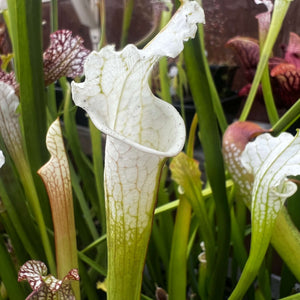
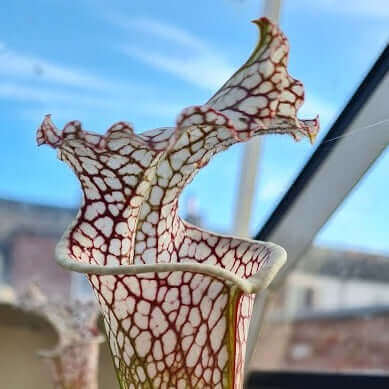
The 'Hurricane Creek' cultivar name can be applied to Sarracenia leucophylla var. alba clones, or their seeds, that were found at the Hurricane Cre...
View full detailsThe 'Hurricane Creek' cultivar name can be applied to Sarracenia leucophylla var. alba clones, or their seeds, that were found at the Hurricane Cre...
View full detailsSarracenia oreophila var. oreophila (Boaz, Etowah County, Alabama)
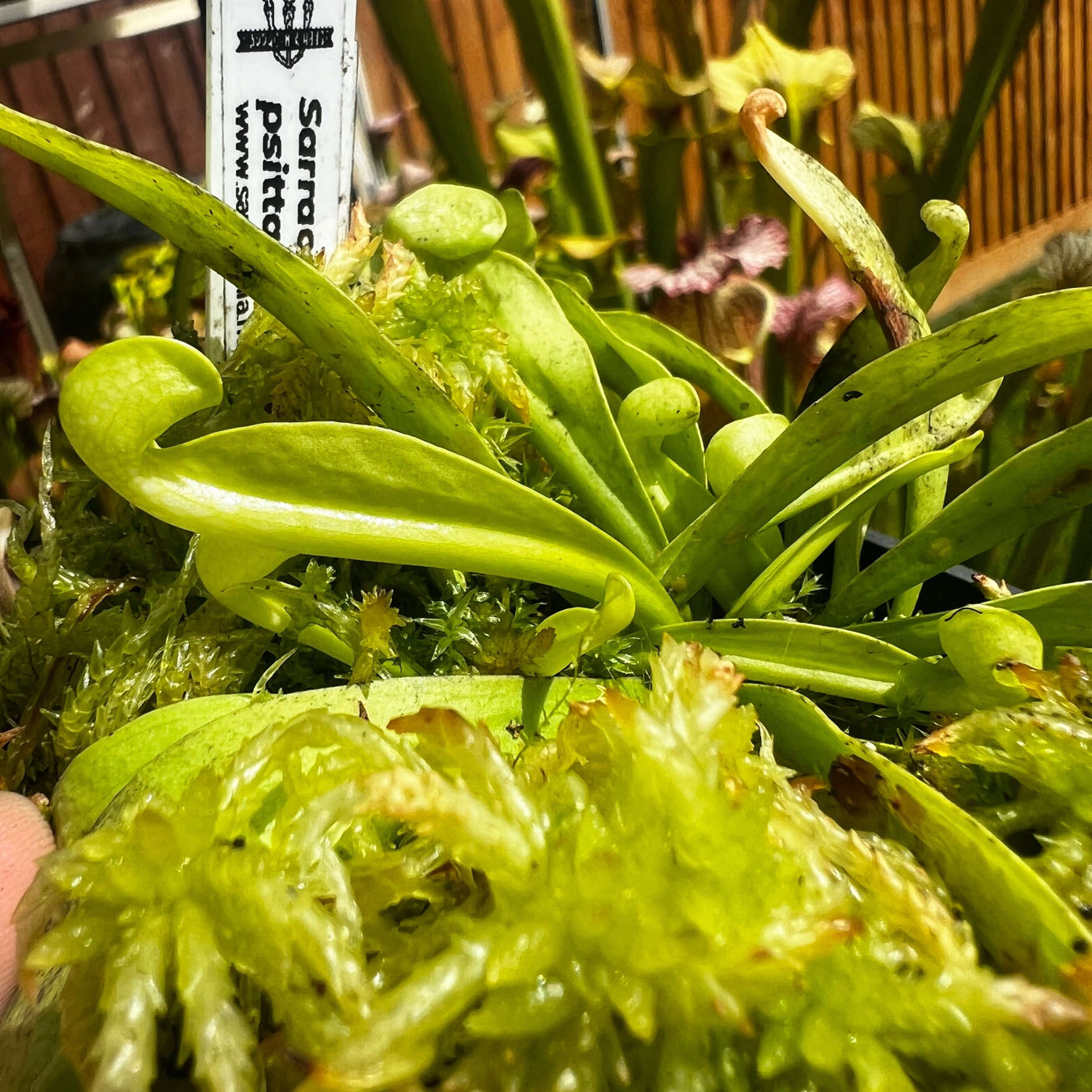
Sarracenia psittacina var. psittacina f. viridescens (Wewahitchka, Gulf County, Florida)
The 'Hurricane Creek' cultivar name can be applied to Sarracenia leucophylla var. alba clones, or their seeds, that were found at the Hurricane Cre...
View full detailsSarracenia leucophylla var. leucophylla (Gas Station Site, Perdido, Alabama)
Created over 40 years ago, Sarracenia leucophylla 'Cronus' was made by crossing plants from Seminole County, Florida and Baldwin County, Alabama. T...
View full detailsSarracenia leucophylla var. alba - No. 5 Christian Klein
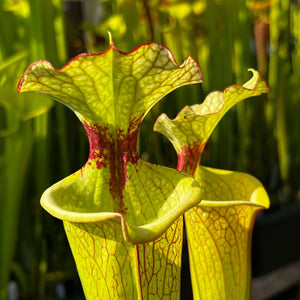
Sarracenia flava var. rubricorpora 'Roy Lancaster' is a beautiful cultivar selected by carnivorous plant expert Matt Soper. Named in honour of the ...
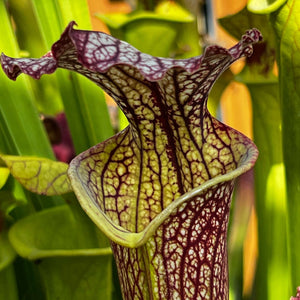
View full detailsThis Sarracenia purpurea subsp. venosa var. burkii (Sarracenia rosea) from Bay County, North Florida, is a large-growing Gulf Coast form with a cle...
View full detailsSarracenia purpurea 'Sorrow' is a unique cultivar with striking pigmentation differences from typical Sarracenia purpurea subsp. purpurea. It origi...
View full detailsSarracenia purpurea ssp. purpurea (Algonquin Provincial Park, Ontario, Canada)
MK-PV41
Introducing the famous Sarracenia flava 'Goldie', a must-have for any Sarracenia collector. This flava boasts bright golden-coloured pitchers that ...
View full detailsSarracenia minor var. okefenokeensis is the giant variant of the species. The pitchers of this plant can grow up to a metre tall! Typical of Sarrac...
View full detailsMK-M18
This is one tall Sarracenia flava var. rugelii! Given time, this plant can reach up to 36" tall making it a very impressive Sarracenia for any coll...
View full detailsSarracenia purpurea subsp. purpurea (Near Durham, Grey County, Ontario, Canada)
This is a fabulous Sarracenia oreophila. The title says it all; the lip and throat are red, and the pitchers are heavily veined! This is a strong-g...
View full detailsCuprea translates from Latin to mean 'copper'. It's easy to see why this name has been given to this variety of Sarracenia flava, the operculum (li...
View full detailsMK-O10
JS-F35
A nice example of a Sarracenia flava var. ornata from Florida. As per the varietal name 'ornata', this Sarracenia flava displays ornata red veins t...
View full detailsA vigorous example of Sarracenia flava var. ornata from Virginia. The pitchers are the classic flava shape with generally fine red veination. For u...
View full details