
WhatsApp
Send us a message
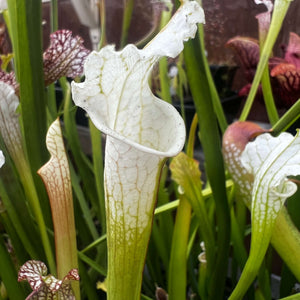
The 'Hurricane Creek' cultivar name can be applied to Sarracenia leucophylla var. alba clones, or their seeds, that were found at the Hurricane Cre...
View full detailsThe 'Hurricane Creek' cultivar name can be applied to Sarracenia leucophylla var. alba clones, or their seeds, that were found at the Hurricane Cre...
View full detailsThe 'Hurricane Creek' cultivar name can be applied to Sarracenia leucophylla var. alba clones, or their seeds, that were found at the Hurricane Cre...
View full detailsMK-L49B
MK-L39a
MK-L83
MK-L18
Sarracenia flava var. rugelii (Blackwater National Park, Florida)
MK-F149
JS-F22, IP-F13
Sarracenia flava var. ornata (Sandy Creek Road, Bay County, Florida)
Sarracenia flava var. ornata 'Killer' is a distinct flava originating from a specific locality in Okaloosa County, Florida. Its genetic background ...
View full detailsSarracenia flava var. ornata F433 is a location-specific form originating from the Green Swamp in North Carolina. It shows the heavy vertical venat...
View full detailsMK-F193
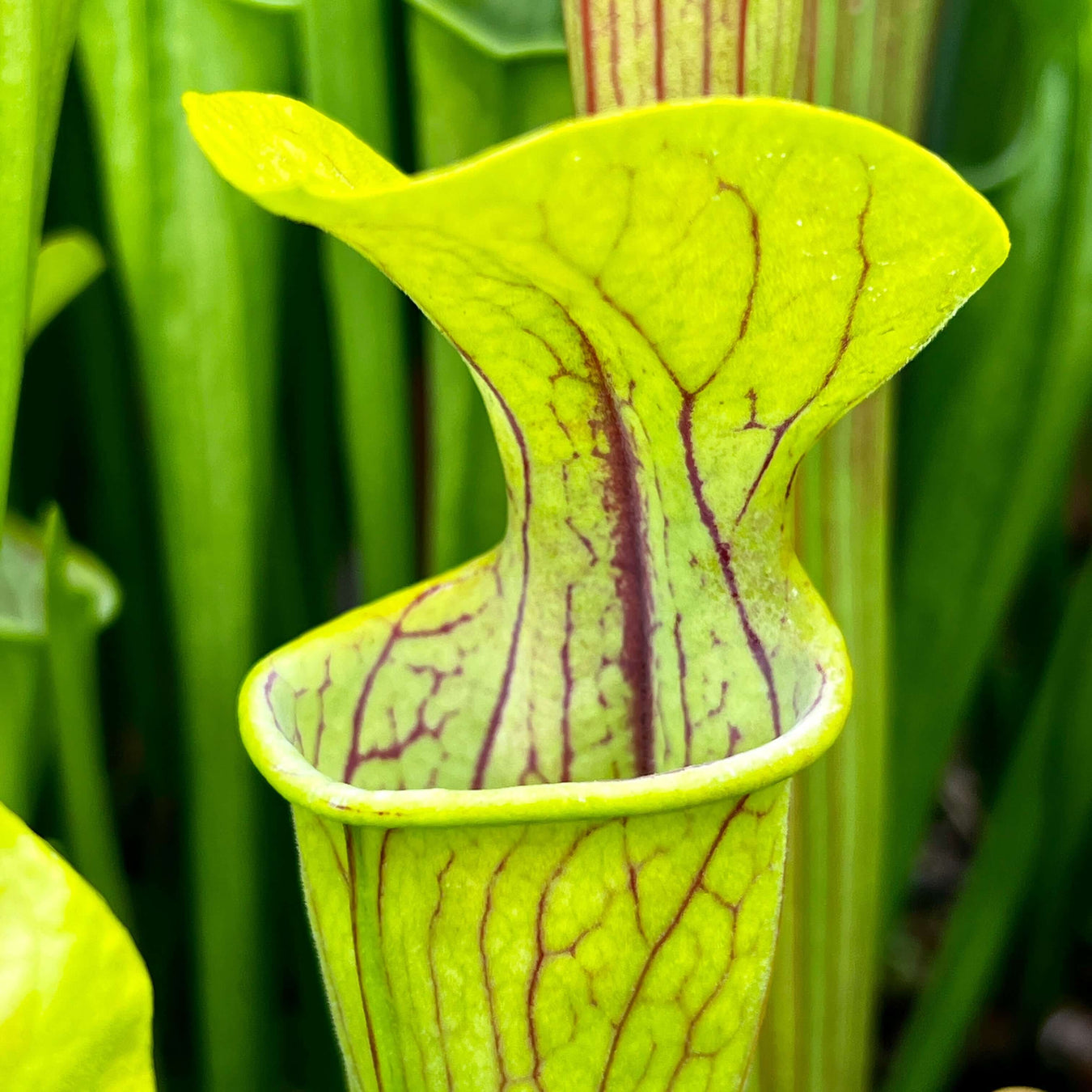
The clue's in the name with this Sarracenia flava! This one's a whopper and is the largest Sarracenia flava var. flava in the collection. The pitch...
View full detailsThis Sarracenia flava f. viridescens from Telogia in Florida is a vigorous, anthocyanin-free form with the stocky proportions associated with plant...
View full detailsSarracenia flava var. atropurpurea (Blackwater, North Florida) F3 is a selected clone originating from the Blackwater area of the Florida Panhandle...
View full detailsThis Sarracenia flava var. atropurpurea from Blackwater River State Forest, Florida (MK-F27B) is a red form with substantial pitchers and dense vei...
View full detailsSarracenia alata var. rubrioperculata – Red Lid (De Soto National Forest, Mississippi) A3 MK is a red-lidded location form recorded in Mike King’s ...
View full detailsJS-A13
Sarracenia alata var. alata (Ocean City, Jackson County, Mississippi)
Sarracenia alata var. alata (Harrison County, Mississippi)
This clone of S. alata var. nigropurpurea is known for its distinct black-coloured tubes, with genetics from a site at the intersection of state ro...
View full detailsSarracenia alata var. cuprea (Deer Park, Washington County, Alabama) is an uncommon copper-lidded form of the pale pitcher plant from the Gulf Coas...
View full details