
WhatsApp
Send us a message
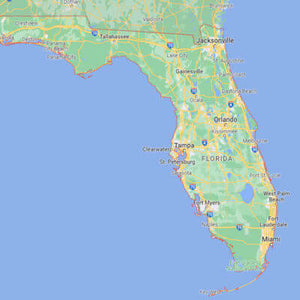
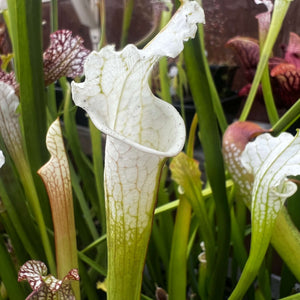
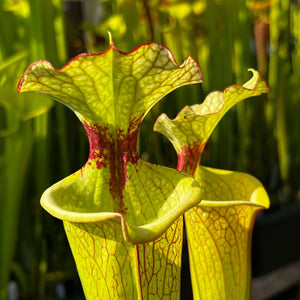
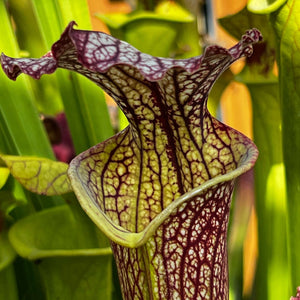
Sarracenia flava, also known as the yellow pitcher plant, has a large natural range that extends from southern Alabama to the coastal plains of southern Virginia, North Carolina and South Carolina.
Many Sarracenia flava clones owned by collectors have location data recorded against them. This location may refer to where the plant was originally collected from or from where seeds were harvested. This data is important from a conservation point of view.
Possibly the most handsome Sarracenia flava var. maxima out there! This Sarracenia flava was selected by Matt Soper of Hampshire Carnivorous Plants...
View full detailsSarracenia flava var. rubricorpora F25 (Apalachicola National Forest, Florida) is a selected red tube form from one of the most famous Sarracenia r...
View full detailsSarracenia flava var. cuprea (Shallotte, Brunswick County, North Carolina) is a copper-lidded form from the coastal plain of North Carolina. Plants...
View full detailsBeautifully blushed with copper on the lid, this Sarracenia flava var. cuprea is a great example of a classic copper-top Sarracenia flava. A vigoro...
View full detailsOriginally from the national collection of Paul & Jackie Gardner of P&J Plants (F RUG 01) this is a fantastic cut-throat Sarracenia flava! ...
View full detailsThis is a vigorous-growing copper-topped Sarracenia flava var. cuprea. The pitcher hoods are large with the cuprea blushing on the top. A really ni...
View full detailsSarracenia flava var. atropurpurea 'Waccamaw' is a stunning Sarracenia flava var. atropurpurea from North Carolina’s Green Swamp. It has the classi...
View full detailsSarracenia flava var. atropurpurea (Santa Rosa Beach, Walton County, Florida) is a dark, heavily pigmented form selected from the Florida panhandle...
View full detailsJS-F130
Sarracenia flava var. rubricorpora - Selfed Mike King Plant (Sumatra, Florida)
Sarracenia flava var. rugelii (Milton County, Florida) MK-F53
Sarracenia flava var. ornata 'Outlaw' is a distinct clone from a specific, threatened locality in western Bay County, Florida. Its origin separates...
View full detailsSarracenia flava var. ornata (Wewahitchka, Florida)
Sarracenia flava var. cuprea (Green Swamp, North Carolina)
Sarracenia flava var. atropurpurea (Blackwater, Florida)
MK-F27B
Sarracenia flava var. rugelii (Blackwater National Park, Florida)
MK-F149
JS-F22, IP-F13
Sarracenia flava var. ornata (Sandy Creek Road, Bay County, Florida)
Sarracenia flava var. ornata 'Killer' is a distinct flava originating from a specific locality in Okaloosa County, Florida. Its genetic background ...
View full detailsMS-F433
MK-F193
The clue's in the name with this Sarracenia flava! This one's a whopper and is the largest Sarracenia flava var. flava in the collection. The pitch...
View full details