Send us a message
Sarracenia 'Ellie Wang' is a beautiful Sarracenia cultivar that Mike Wang developed in the San Francisco Bay Area. He named the plant for his daugh...
View full details
Sold out
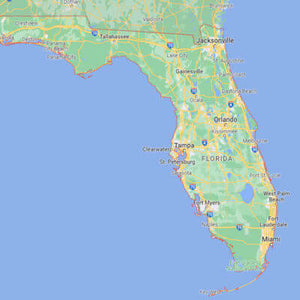
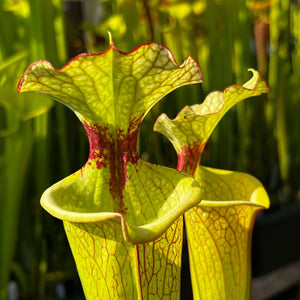
Sarracenia flava var. ornata - Maroon Throat (Apalachicola National Forest, Florida) MK-F88
Arguably one of the best Sarracenia flava var. ornata available. This is a sturdy, vigorous Sarracenia flava with strong colouration making it a st...
View full details5.0 / 5.0
2 Reviews
This lovely-looking Sarracenia hybrid takes some of the best qualities from both parents. The pitchers are velvety soft pubescent form from the Sar...
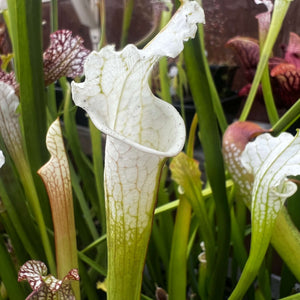
View full detailsSarracenia leucophylla var. leucophylla - Purple & White Giant (Rt71, Altha, Calhoun County, Florida)
A nice, vigorous form of Sarracenia × alava (Sarracenia flava X Sarracenia alata). Looks great if left to form a decent sixed clump.
OK, so let's take a look at the makeup of this plant in terms of the species involved, here's what we get; Sarracenia [leucophylla X (flava x rubra...
View full detailsSarracenia × moorei OBH26 comes from a cross made by Oliver Bres of Sarracenia Addiction in France. He paired a large red-form Sarracenia × moorei ...
View full detailsSarracenia × moorei 'Santa Rosa Big Mouth' from Santa Rosa County, Florida, is a tall plant with pitchers that often reach 70 to 80 cm. The name fi...
View full details5.0 / 5.0
1 Review
Sarracenia flava f. viridescens 'Suspicion' is a well-known, all-green clone of Sarracenia flava that stands out in any collection. The only named ...
View full details5.0 / 5.0
1 Review
This great-looking Sarracenia was purchased by ourselves as Sarracenia alata 'Black Flag', presumably due to the dark hood that develops throughout...
View full detailsOne of the giants! The 'Chipola Giant' Sarracenia purpurea subsp venosa var. burkii (or Sarracenia rosea if you prefer) clones are real show-stoppe...
View full detailsCreated in 1992 by John Hummer, this hybrid is one of the most instantly recognisable Sarracenia around. The name Sarracenia 'Hummer's Hammerhead' ...
View full detailsMK-H45
Sarracenia 'Manta Ray' is a distinctive Sarracenia cultivar prized for its unique form. Its exact genetic lineage is not widely published, making i...
View full detailsSarracenia purpurea, being native to the North America continent, should not be expected to be found growing wild in Ireland. However, there are po...
View full detailsThis is a lovely-looking little Sarracenia hybrid. Although at first glance it appears to be a pretty Sarracenia leucophylla, one of the parents is...
View full detailsSarracenia × areolata 'October Hope' is a beautiful hybrid of Sarracenia leucophylla and Sarracenia alata selected for its strong late-season growt...
View full detailsThe Sarracenia 'Tennis Ball Eater' Clone B is a striking hybrid created by Gary Wheeler, derived from Sarracenia leucophylla X (Sarracenia moorei X...
View full detailsThe 'Hurricane Creek' cultivar name can be applied to Sarracenia leucophylla var. alba clones, or their seeds, that were found at the Hurricane Cre...
View full detailsSarracenia purpurea 'Chipola Giant' is a name given to a few clones of giant Sarracenia purpurea subsp. venosa var. burkii (Sarracenia rosea) origi...
View full detailsSarracenia rubra subsp. alabamensis AL003 comes from a secret site in central Alabama. The exact location stays protected to keep wild plants safe....
View full detailsMK-L101, JS-L12
MK-H386D
Yes. Sarracenia are temperate carnivorous plants and naturally go dormant in winter. In the UK, dormancy usually happens outdoors without intervention as days shorten and temperatures drop. During dormancy, growth slows or stops, and older pitchers may brown off; that’s normal. Keep the plant outside in a bright, airy spot, keep the compost damp (not waterlogged), and avoid keeping it warm indoors over winter. Dormancy is important for long-term health and strong growth in spring.
Use a low-nutrient carnivorous plant mix such as peat and perlite, or peat and silica sand (not builders’ sand). Avoid multi-purpose compost, garden soil, and anything with fertiliser added; these can burn the roots. If you prefer peat-free options, choose a carnivorous-plant-safe mix specifically formulated for these plants. Repotting into a fresh mix every few years helps keep plants vigorous.
Full sun is ideal. In a bright greenhouse or outdoors in a sunny position, you’ll get better colour, sturdier pitchers, and stronger growth. A little light shade is usually fine, but too much shade often causes weaker, greener growth and fewer pitchers. If you’re growing on a balcony, patio, or in a bog planter, choose the brightest spot you have.
Rainwater is strongly recommended. Like most carnivorous plants, Sarracenia dislike minerals and salts that can build up in compost over time. Use rainwater, distilled water, or reverse-osmosis (RO) water whenever possible. If you’re stuck, some UK tap water is low enough in dissolved minerals to use occasionally, but long-term it can lead to leaf tip burn, slow growth, and a gradual decline. When in doubt, rainwater is safest.
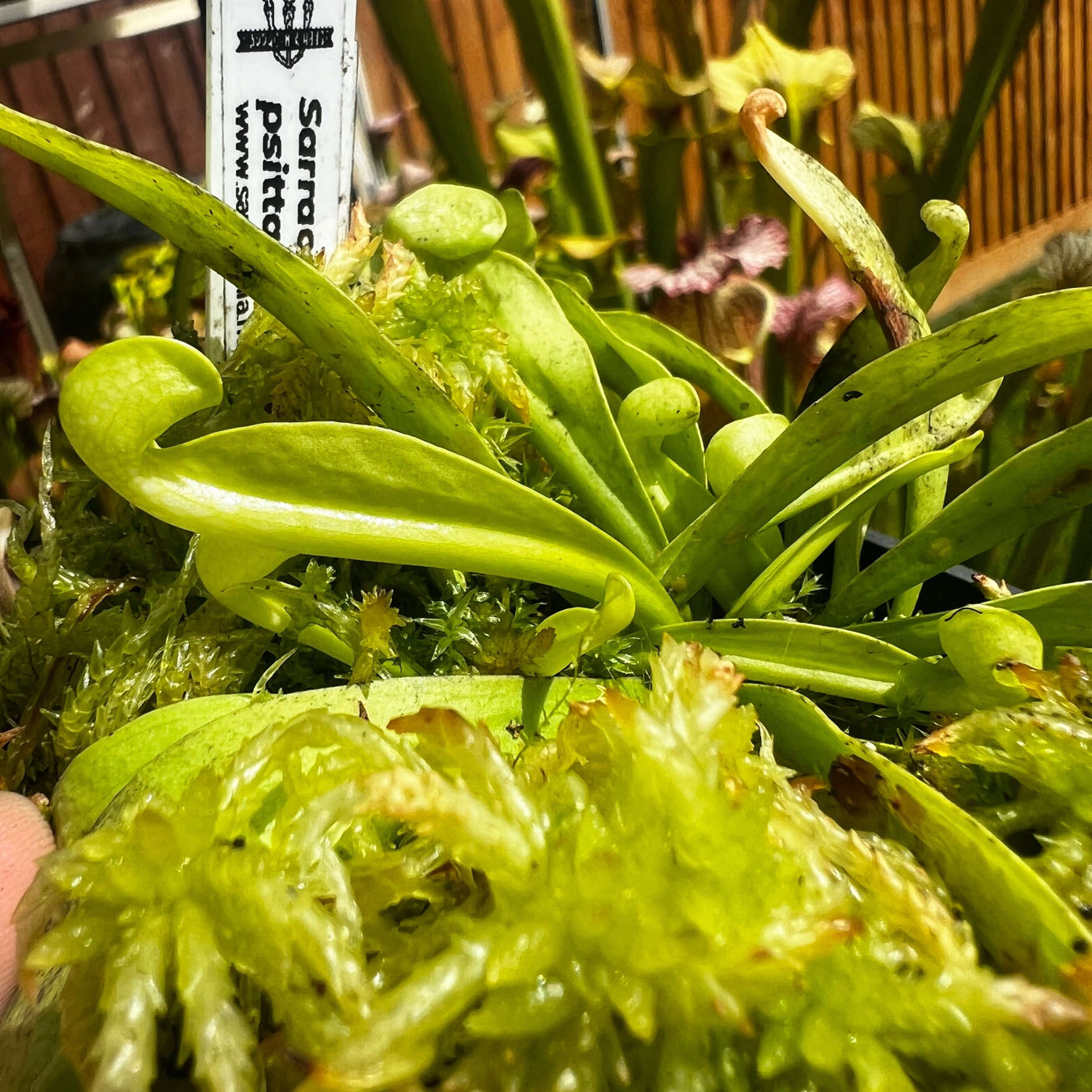
In most of the UK, yes, Sarracenia are generally well-suited to outdoor growing. They can handle typical UK winter conditions while dormant. An unheated greenhouse will provide your plants with a longer growing season, though. Species such as Sarracenia leucophylla and Sarracenia psittacina often perform better in a greenhouse.