Send us a message
Shop Venus flytraps (Dionaea muscipula) grown at our nursery in Leicestershire and propagated from our own collection. Choose from plants with classic snapping traps, striking colours and unusual shapes, with UK delivery.
Dionaea muscipula 'Reptile' is a Venus flytrap cultivar selected and named by the German grower Kai Becker. At first glance, the plant has the appe...
View full details5.0 / 5.0
2 Reviews
Dionaea muscipula 'Dirk Ventham's Giant', also known as 'G14', is a giant Venus flytrap clone originally grown by Dirk Ventham. The clone was known...
View full details5.0 / 5.0
3 Reviews
Dionaea muscipula D23 is a compact Venus flytrap clone selected for its strong colour and dense growth. It forms a low, spreading rosette with many...
View full detailsThe Dionaea 'A2' is a specific cultivar with a direct link to one of the most famous giant venus flytraps. Henning von Schmeling created this plant...
View full detailsDionaea muscipula 'Giant Sand' is a Venus flytrap developed by Norman Parker, a grower closely associated with Adrian Slack. This cultivar is known...
View full detailsDionaea muscipula 'Giant Form' Trevor Cox is a vigorous giant Venus flytrap selected for its impressive trap size and strong upright growth. Mature...
View full details5.0 / 5.0
1 Review
The Venus flytrap Dionaea muscipula 'B52' is a cultivar developed by Henning von Schmeling in the early 2000s. Its story starts with a plant he nam...
View full details5.0 / 5.0
1 Review
Dionaea muscipula 'South West Giant' × 'Sawtooth' is a cultivar cross that combines two well-known traits. It brings together the large trap size o...
View full details5.0 / 5.0
2 Reviews
Dionaea muscipula 'Spider' is a Venus flytrap cultivar selected by South West Carnivorous Plants more than a decade ago. The plant is known for its...
View full details5.0 / 5.0
3 Reviews
The Venus flytrap cultivar known as 'Bimbo' possesses some of the largest leaves among all other Dionaea cultivars. The traps, which are positioned...
View full detailsThis is all green Dionaea muscipula is a vigorous grower that remains bright green throughout the growing season. Unlike most Venus flytraps, this ...
View full details5.0 / 5.0
1 Review
Dionaea muscipula 'Rouge Sombre' is a Venus flytrap cultivar prized for its exceptionally dark colouration. The plant grows with a compact, prostra...
View full details5.0 / 5.0
3 Reviews
Dionaea muscipula 'Akai Ryu' is a well-known clone of Venus flytrap. Its name, 'Akai Ryu', translates from Japanese as 'Red Dragon'. This name refe...
View full detailsAll Venus flytraps belong to one species, Dionaea muscipula, but individual varieties can look quite different. Some grow close to the compost, while others hold their traps on upright leaves. Trap size, colour and the shape of the teeth give each plant its character.
If you’re buying your first flytrap, look for a vigorous variety with straightforward care requirements. We recommend plants like Dionaea 'Red Bull' for new growers. For an existing collection, you might prefer larger traps, deep red foliage or an unusual trap shape.
Our flytraps are propagated by division from our mother plants and supplied in 9cm pots. Product photographs show the mother plants, and the size of individual divisions varies. Check each listing for details, or contact us if you would like to know the size before ordering.
Appearance also changes with the seasons. Plants bought during winter dormancy may have fewer traps than those shown in summer photographs.
A sunny position, suitable carnivorous plant compost and low-mineral water provide the foundations for healthy growth. Our Venus flytrap care guide explains growing locations, watering and winter care in the UK.
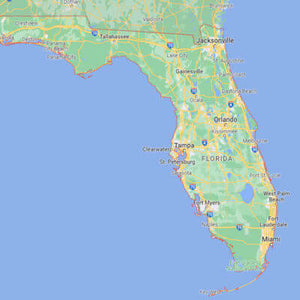
The Venus flytrap (Dionaea muscipula) originates from a small area of the south-eastern United States, mainly in North and South Carolina. In the wild, it grows in open, sunny wetlands with acidic, nutrient-poor soils that stay moist for much of the year. Its natural range is surprisingly limited compared with how widely the plant is now cultivated around the world. Venus flytraps are adapted to this challenging habitat by trapping insects and other small prey, which helps them obtain nutrients that are scarce in the soil.
Use a low-nutrient carnivorous plant mix such as peat and perlite, or peat and silica sand (not builders’ sand). Avoid multi-purpose compost, garden soil, and anything with fertiliser added; these can burn the roots. If you prefer peat-free options, choose a carnivorous-plant-safe mix specifically formulated for these plants (test with one plant before using on your entire collection). Repotting into a fresh mix every year helps keep plants vigorous.
Yes. Dionaea are temperate carnivorous plants and naturally go dormant in winter. In the UK, dormancy usually happens outdoors without intervention as days shorten and temperatures drop. During dormancy, growth slows or stops, and older traps may turn black and shrivel up; that’s normal. Keep the plant outside in a bright, airy spot, keep the compost damp (not waterlogged), and avoid keeping it warm indoors over winter. Dormancy is important for long-term health and strong growth in spring.
In most of the UK, yes, Dionaea are generally well-suited to outdoor growing. They can handle typical UK winter conditions while dormant. An unheated greenhouse will provide your plants with a longer growing season, though. Cultivars that are heavily deformed or delicate often do better in a greenhouse.
Rainwater is strongly recommended. Like most carnivorous plants, Dionaea can't tolerate minerals and salts that can build up in compost over time. Use rainwater, distilled water, or reverse-osmosis (RO) water whenever possible. If you’re stuck, some UK tap water is low enough in dissolved minerals to use occasionally, but long-term it can lead to slow growth and a gradual decline. When in doubt, rainwater is safest.
Full sun is ideal. In a bright greenhouse or outdoors in a sunny position, you’ll get better colour, larger traps, and stronger growth. A little light shade is usually fine, but too much shade often causes weaker, greener growth and fewer traps. If you’re growing on a balcony, patio, or in a bog planter, choose the brightest spot you have.
£99.00 away from free shipping!